Your Weak Side: Why Half Your Karate Lags, and How to Close the Gap
Every karateka has a good side and a side they quietly avoid. Where the gap comes from, why doing a thousand right kicks will never give you a left one, how to measure your own asymmetry, and a training block that closes it without wrecking your strong side.
Everyone has one
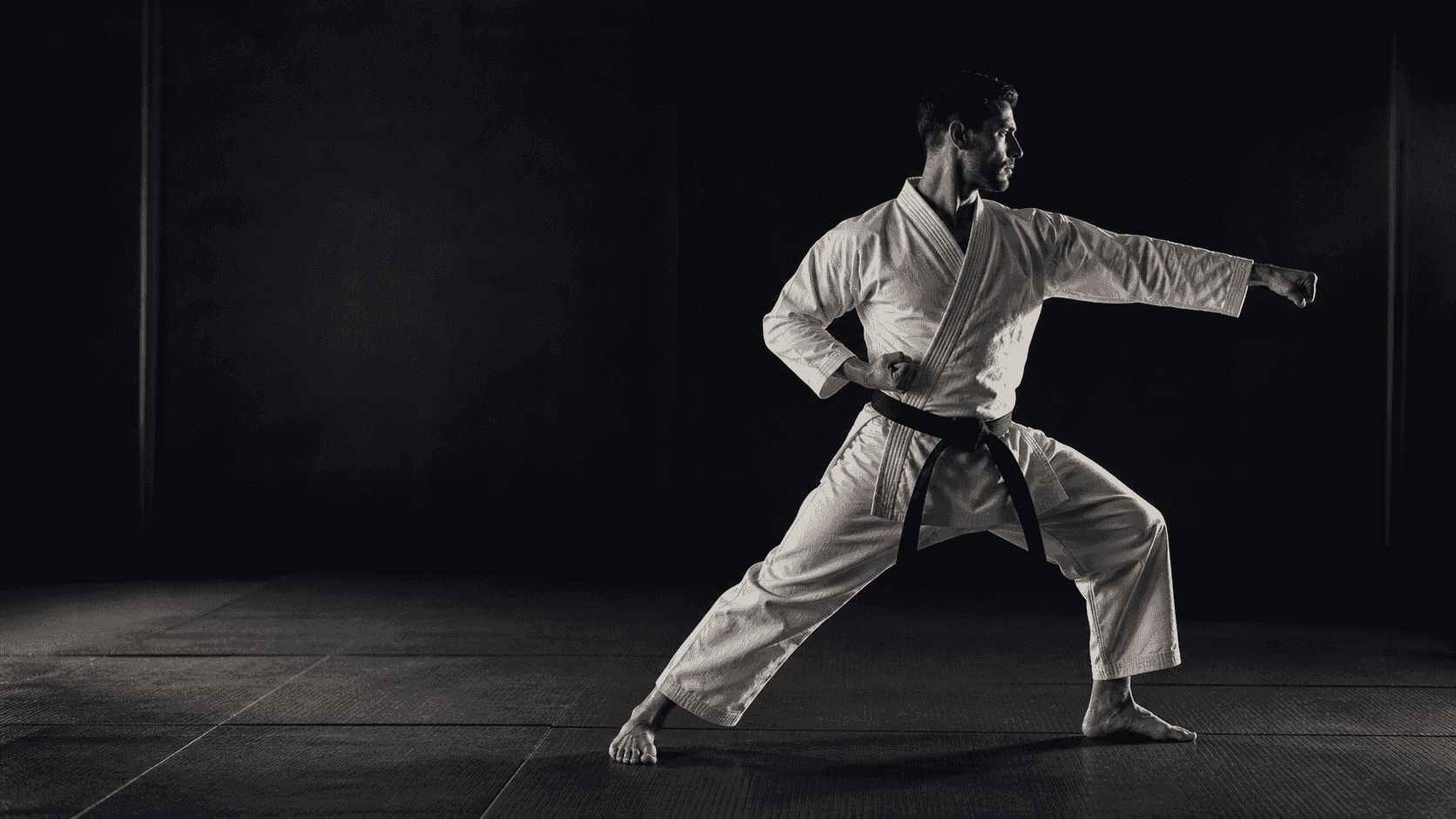
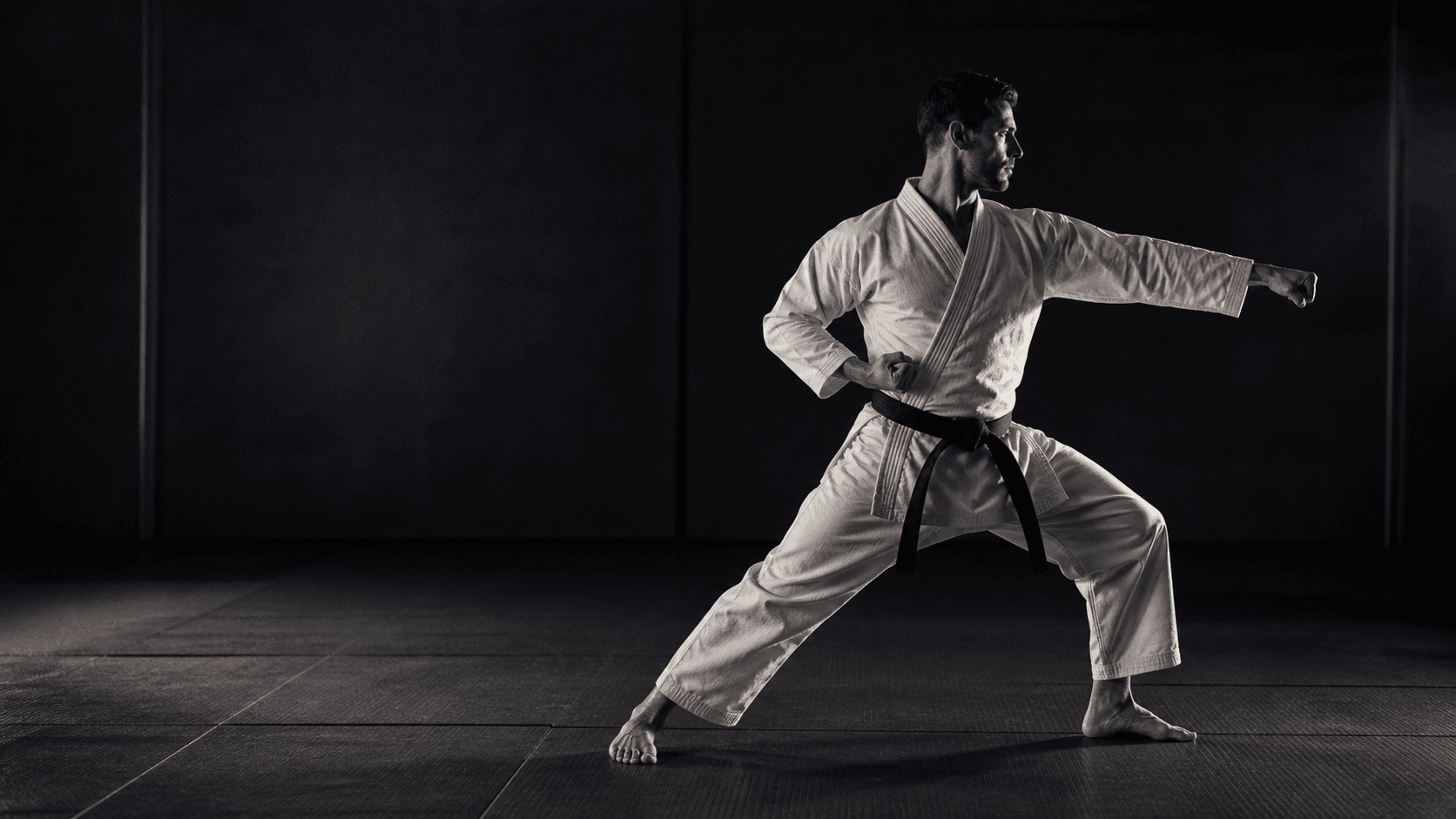
Watch any karate class from the side of the room and you can identify each student's preferred side within about a minute. It shows in which leg goes back when they are told to take a fighting stance, which kick they throw when the instructor stops giving instructions, and which side of a partner drill they look uncomfortable on. Nobody is symmetrical. The useful questions are how large your gap is, where it came from, and whether it is worth spending a training block on.
Where the asymmetry actually comes from
Hand dominance is the obvious answer and the least complete one. Foot dominance is a separate thing and does not always match the hand — plenty of right-handed people are more stable and more coordinated on the left leg, which is why some students punch better on one side and kick better on the other.
The bigger contributors are structural to how karate is taught and practised.
- The first repetition is almost always done on the strong side. When a new technique is introduced, you try it on the side you trust. That side therefore gets a head start on every single technique in the curriculum, and the head start compounds over years.
- Correction lands unevenly. An instructor watching you attempt something new corrects what they see first, and what they see first is your confident attempt. The weak side often gets the leftover minutes at the end.
- Kumite lets you choose. In sparring you pick your stance, and you pick the same one every time. Thousands of repetitions of decision-making, timing and distance accumulate on one side only.
- Competition rewards specialising. If you have one scoring technique that works, the incentive is to sharpen it, not to build its mirror image. This is a rational choice with a long-term cost.
Skill does not cross over the way you hope
This is the part worth understanding properly, because it determines whether the problem fixes itself.
Strength has some crossover. Training one limb produces a modest strength increase in the untrained one, and the effect is generally understood to be largely a nervous-system adaptation rather than muscle growth on the untrained side. It is real, and it is why an injured athlete is often told to keep training the healthy limb.
Coordination is different. Some skill does carry over to the other side, but far less than most people hope. The sequencing, the timing, the small postural adjustments that make a technique work are learned by doing that technique, on that side. A thousand right roundhouse kicks will make your right roundhouse kick excellent and will do much less for your left. If you want a left one, you have to build a left one.
How to measure your gap honestly
Guessing is unreliable, because the strong side feels normal and normal feels like nothing. Test it.
- Film both sides. Same technique, same distance, three repetitions each, camera at hip height and to the side. Watch it once looking only at the supporting leg, once at the hips, once at the hands. The gap is usually larger than it feels.
- Count repetitions against a clock. Twenty seconds of continuous kicks each side, at a height you can hold. A difference in count is informative; a difference in how the technique degrades over those twenty seconds is more informative.
- Stand on one leg with your eyes closed, next to a wall you can touch, and time it. Do the weaker side first. This tests the balance and ankle control that everything else rests on, and it is often where the real difference lives.
- Note which foot goes back when you are startled or nudged. That is your true default under pressure, which is not always the side you think you prefer.
What closing the gap should actually mean
Not symmetry. Perfect left-right equality is neither achievable nor especially desirable, and chasing it will cost you more than it returns. The target is that your weak side is a genuine option: good enough to use when the situation calls for it, good enough that an opponent cannot dismiss it, good enough that an injury to your strong side does not end your training year.
A training block that works
Do this as a defined block of six to eight weeks, not as a permanent policy.
- Start every new technique on the weak side. This costs nothing and changes everything over a few years. It is the single highest-return habit in this article.
- Reverse the ratio on purpose. Three repetitions on the weak side for every two on the strong side, for the duration of the block. Then return to even.
- Do the weak side while fresh. Most people tack it on at the end of a session when they are tired and sloppy. Weak-side work belongs in the first third of the class, when your attention is still sharp.
- Spar one round per session in the other stance. Uncomfortable, and the point. Everything you have learned about distance and timing has to be rebuilt on that side, and only sparring rebuilds it.
- Go slow and correct. Your weak side has no bad habits yet, which is a rare advantage. Do not hand it a set by rushing.
The honest costs
Your strong side will feel slightly worse for a few weeks. This is normal, it is temporary, and it is the main reason people abandon this work in the second week.
Do not run this block during competition preparation. Choose a quiet stretch of the calendar. Deliberately degrading your best technique eight weeks before a tournament is a poor trade.
Some asymmetry is structural rather than trained: an old injury, a real leg-length difference, a spinal curve. Forcing symmetry onto a structural difference creates new problems. If one side hurts rather than simply feeling clumsy, that is a question for a doctor before it is a question for a coach.
Why bother
An opponent who has read your right side has read half of you. One-sided training concentrates wear on one set of joints over a career that is meant to last decades. And in kata, half the movements go the other way regardless of what you prefer. The weak side is not a vanity project. It is the half of your karate you have not built yet.
Come and train in Kartal
At Kartal Karate Academy we believe it is far cheaper to build the habit at white belt than to retrofit it at brown. Sensei Behzad Yaghoubian and Sensei Homa Yaghoubian, both International Karate Champions, teach children's karate, adult karate, self-defense and conditioning at Yakacık Spor Kulübü, Spor Cd. No:4, Cumhuriyet Mahallesi, 34876 Kartal, İstanbul.
Classes run on Tuesdays and Saturdays, 18:00–19:00, with an adult class on Thursdays, 18:00–19:00, and the first class is free. Book a trial at karatekartal.fit/en/register, or call +90 501 366 56 30.