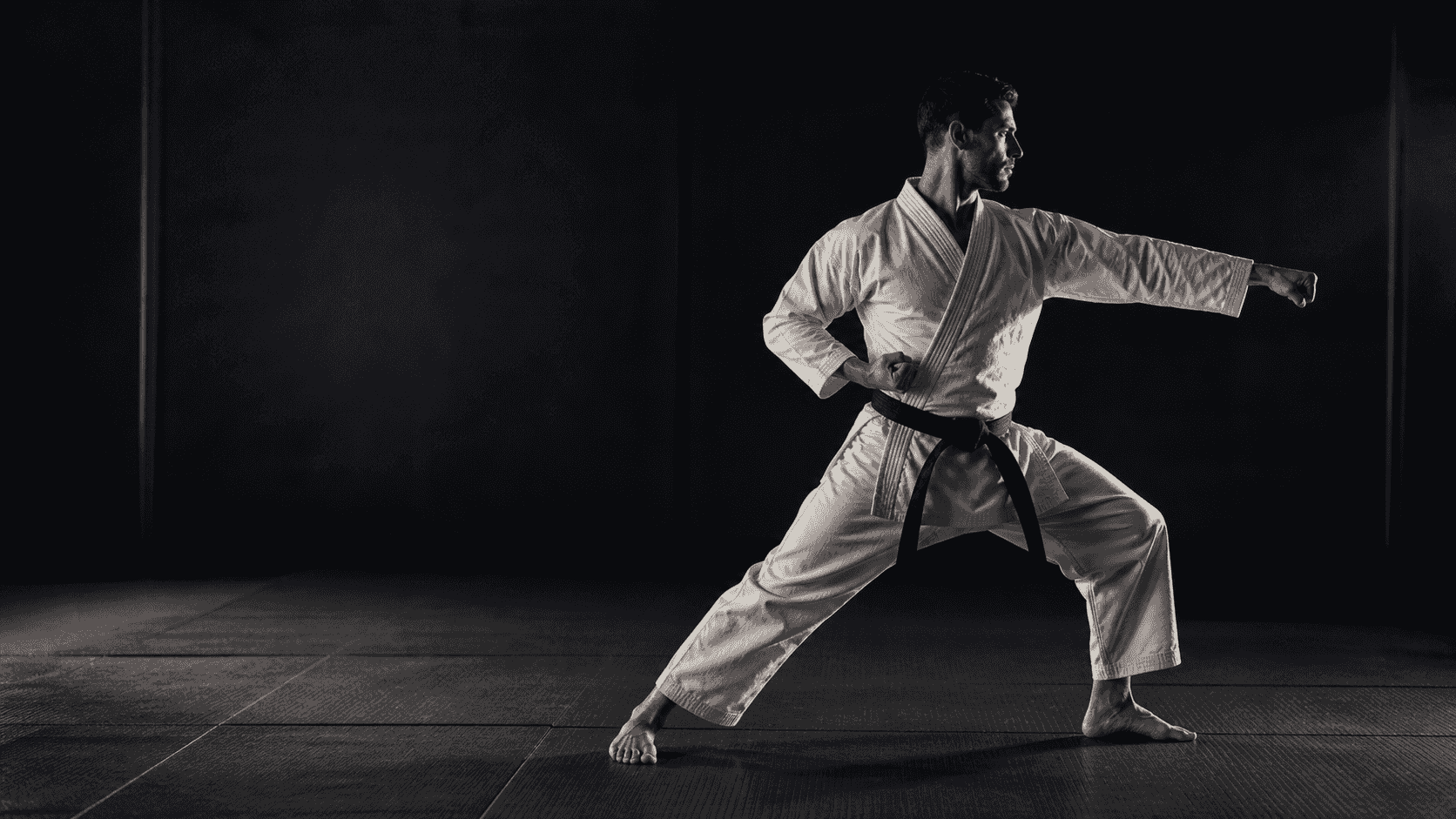
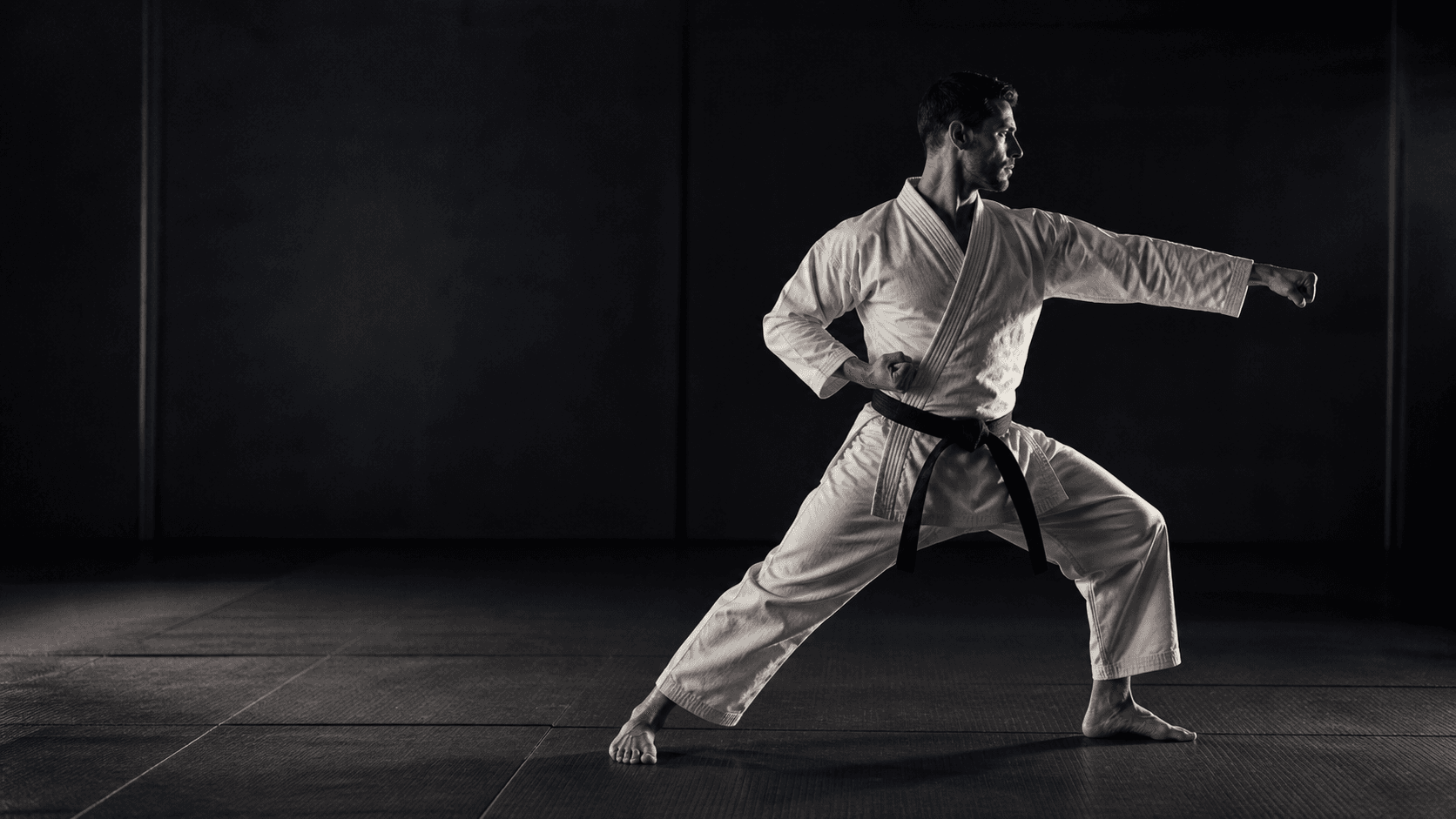
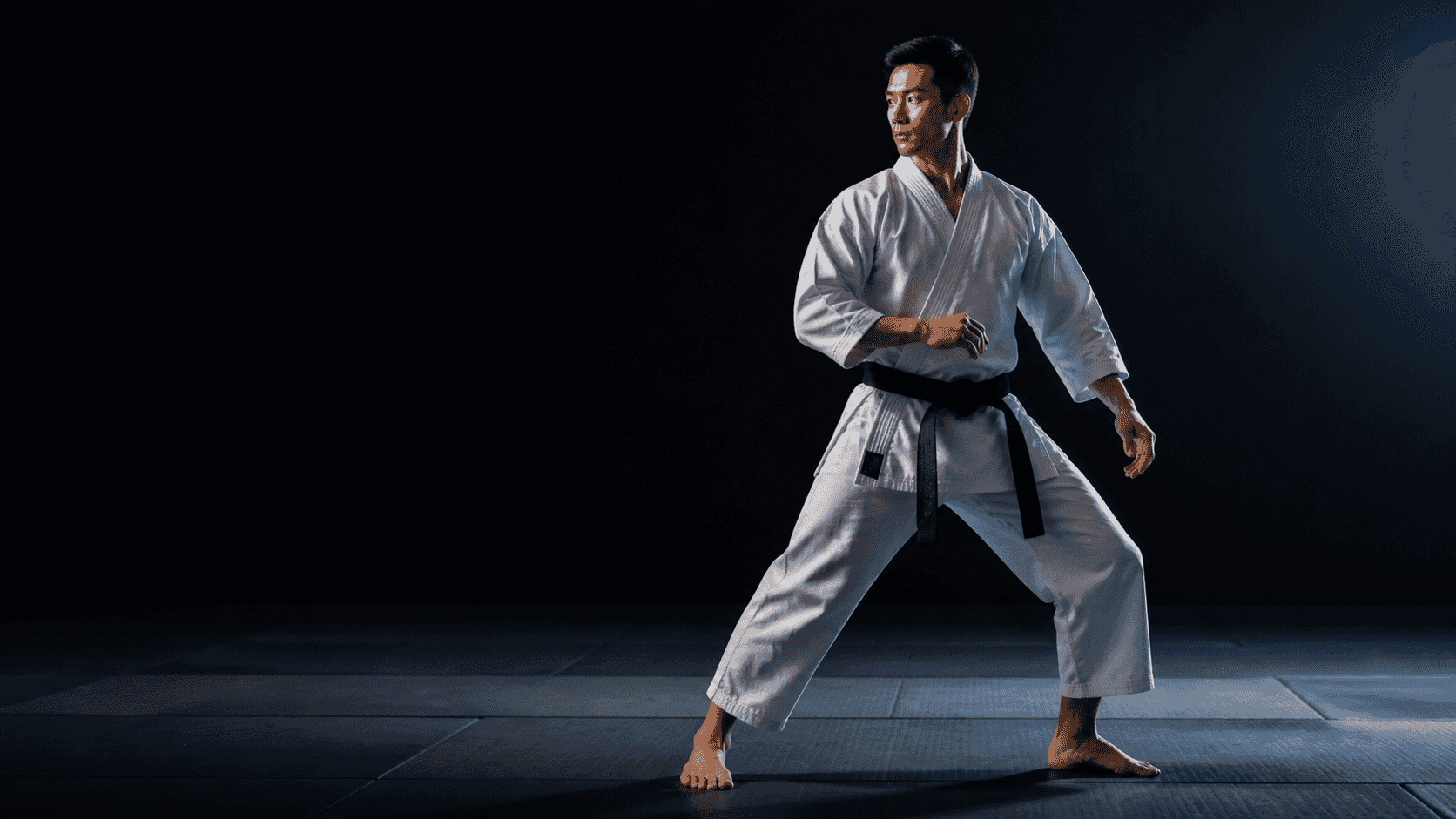
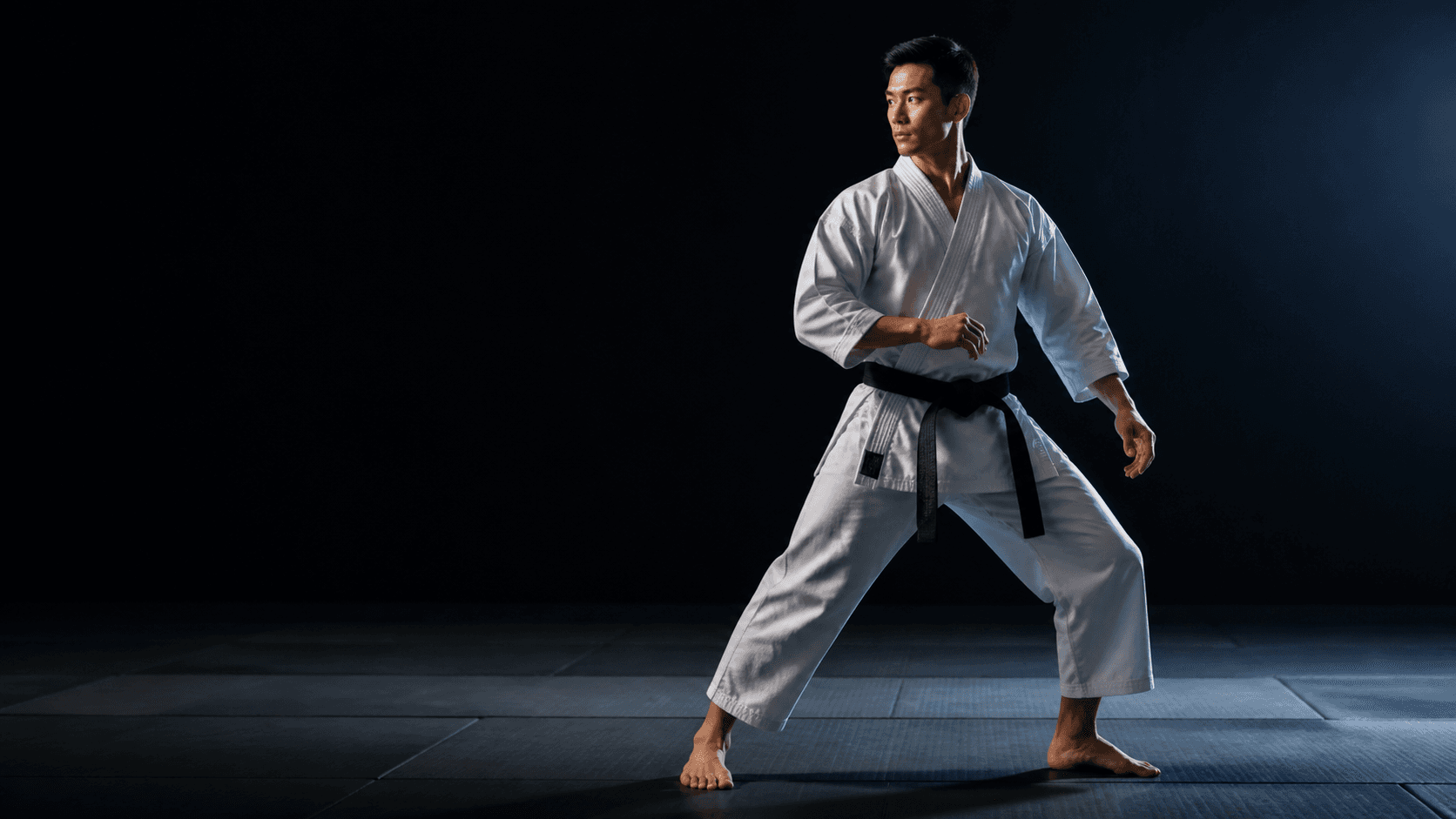
The Supporting Leg: Pivot Mechanics and Knee Health in Karate
The leg nobody watches
When a roundhouse kick lands cleanly, everyone in the room watches the leg that did the kicking. That is the wrong leg to watch. The leg standing on the floor is the one deciding whether the kick has any power in it, whether you keep your balance afterwards, and whether your knee is still comfortable when you are fifty. Coaches call it the supporting leg, and in most karateka it is the least coached part of the technique.
This article is about what happens in that leg during a pivot, why the knee ends up carrying load it was never designed to carry, and what you can change in your next class.
What a pivot actually is
Any rotating technique — mawashi-geri, ushiro-geri, a turn in kata, a reverse punch driven from the hips — asks your body to rotate around a foot that is in contact with the ground. That rotation has to be shared out between the joints of the supporting leg. Three of them can contribute.
- The hip is a ball-and-socket joint. It is built for rotation and can supply a large share of it.
- The ankle and foot turn a useful amount, especially once the heel is off the floor and the weight sits over the ball of the foot.
- The knee is a hinge. It bends and straightens well. It permits only a small amount of rotation, and only while it is bent.
Added together that is plenty of range for a full turn, provided the hip and the foot do most of the work. The trouble starts when they do not.
Where the knee gets caught
Picture a beginner throwing a roundhouse kick with the supporting heel glued to the floor. The hips are told to rotate. The foot cannot turn, because friction and a flat heel have locked it in place. The hip does what it can. The difference between what the hips demanded and what the foot allowed has to go somewhere, and it goes into the knee: the shin twists relative to the thigh while the joint is loaded with body weight.
That is the whole mechanism, and it accounts for a large share of the non-contact knee complaints that show up in a karate class. It is not exotic. Anything that stops the foot rotating freely makes it worse — socks on a slick floor, grippy soles on a mat, or simply never having been told to lift the heel.
The knee falling inward
There is a second version of the same problem. As the hips rotate, the knee drifts inward toward the midline while the foot stays put. The joint is then loaded at an angle it does not like, during the most forceful part of the movement. You will see this most often in the last ten minutes of a hard class, and that timing is a clue: the muscles on the outside of the hip that keep the thigh in line fatigue, and once they do, nothing is holding the knee stacked over the foot.
Four things to change in your next class
None of this needs a new curriculum. It needs attention inside work you already do.
- Lift the heel before the hips move. Not at the same time, and certainly not afterwards. On every rotating technique the supporting heel comes off the floor, the weight moves onto the ball of the foot, and only then do the hips turn.
- Point the supporting foot further round than feels necessary. On most kicks the heel should finish facing roughly where the kick is going. If you finish with the heel still pointing sideways, your hip never completed its rotation and the knee absorbed the remainder.
- Watch the knee, not the kick. Ten slow kicks each side in front of a mirror at about quarter speed, looking only at the supporting knee. It should stay stacked over the middle of the foot. If it dives inward, stop and reset rather than pushing through.
- Treat fatigue as information. A knee that starts collapsing inward at the end of class is not telling you to try harder. Slow the technique down and hold the alignment. Repeating a poor pattern while tired is exactly how it becomes your default pattern.
The strength that protects the pivot
Technique fixes most of this. Strength is what holds the fix in place when you are tired. The muscles that matter are the ones on the side of the hip that stop the thigh drifting inward, the muscles at the back of the hip that produce the rotation in the first place, and the calf, which has to manage a heel-raised foot under load.
Two or three short sessions a week are enough.
- Single-leg sit-to-stand from a chair, done slowly, watching that the knee stays over the foot. Sets of six to eight each leg.
- Side-lying leg raises or banded side steps for the outside of the hip. They feel trivial. They are not.
- Calf raises, both feet and then one foot, to build tolerance for pivoting on the ball of the foot.
Be honest about the tradeoff. This work is dull, it does not feel like karate, and nothing visible happens for about six weeks. Most people skip it and then blame the kick.
When it is not a technique problem
Not all knee pain is a pivot problem. Swelling, a joint that locks or gives way, pain that wakes you at night, or pain going down stairs is a medical question rather than a coaching one. See a doctor. A sensible coach will adapt your training around a diagnosis, but no amount of correcting heel position fixes a structural problem, and pretending otherwise costs months.
Thirty years, not thirty days
Karate is unusual in that people expect to still be doing it decades after they start. The supporting leg is where that ambition is won or lost. Kicking harder this month is easy. Kicking well at sixty depends almost entirely on whether the joints that were built to rotate did the rotating for all the years in between.
Train with us in Kartal
At Kartal Karate Academy we coach the supporting leg from the first lesson, because building the habit is far easier than unpicking it later. Sensei Behzad Yaghoubian and Sensei Homa Yaghoubian, both International Karate Champions, teach children's karate, adult karate, self-defense and conditioning at Yakacık Spor Kulübü, Spor Cd. No:4, Cumhuriyet Mahallesi, 34876 Kartal, İstanbul.
We are open Monday to Saturday, 09:00 to 21:00, and the first class is free. Come and try one at karatekartal.fit/en/register, or call +90 501 366 56 30.