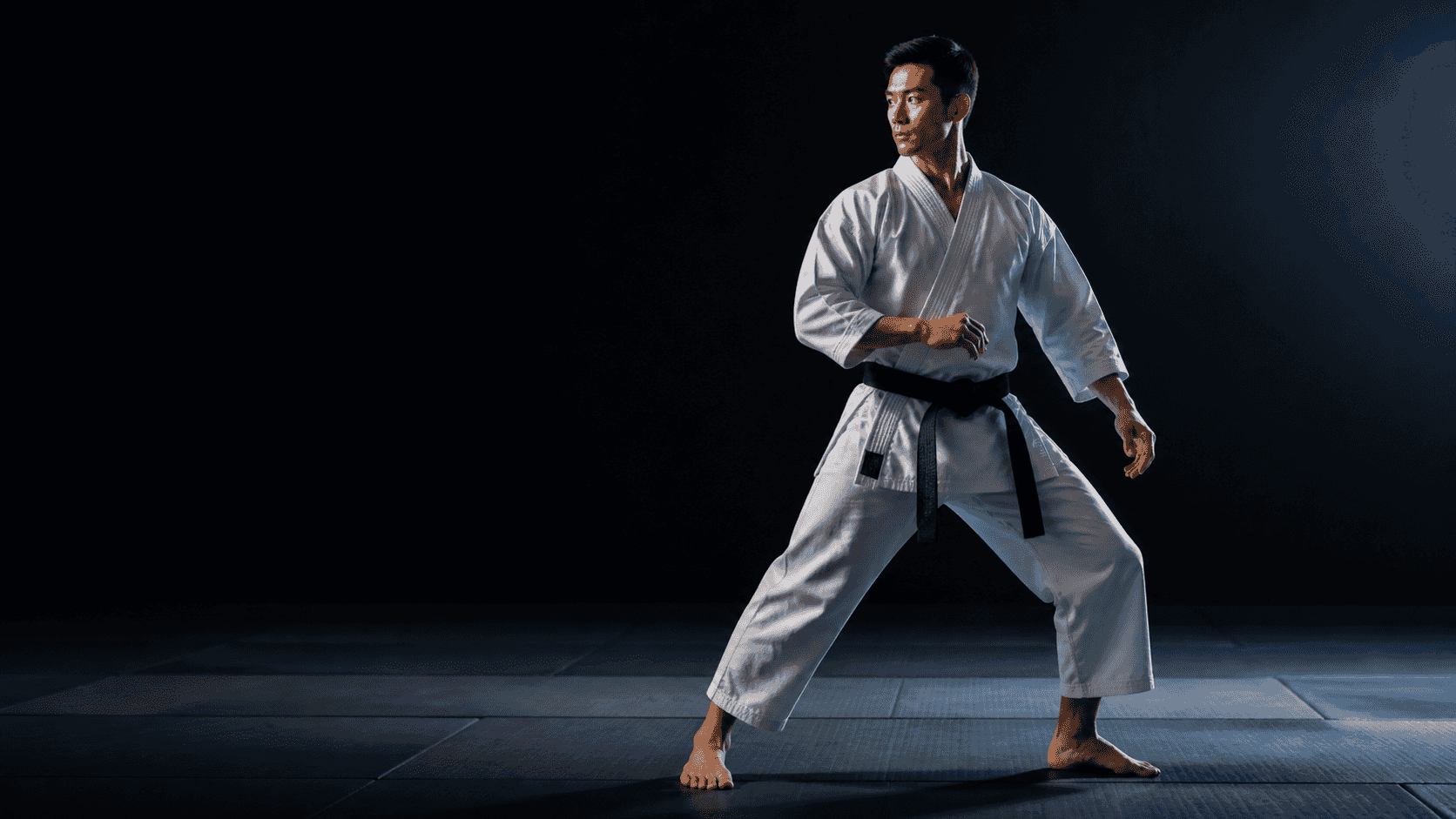
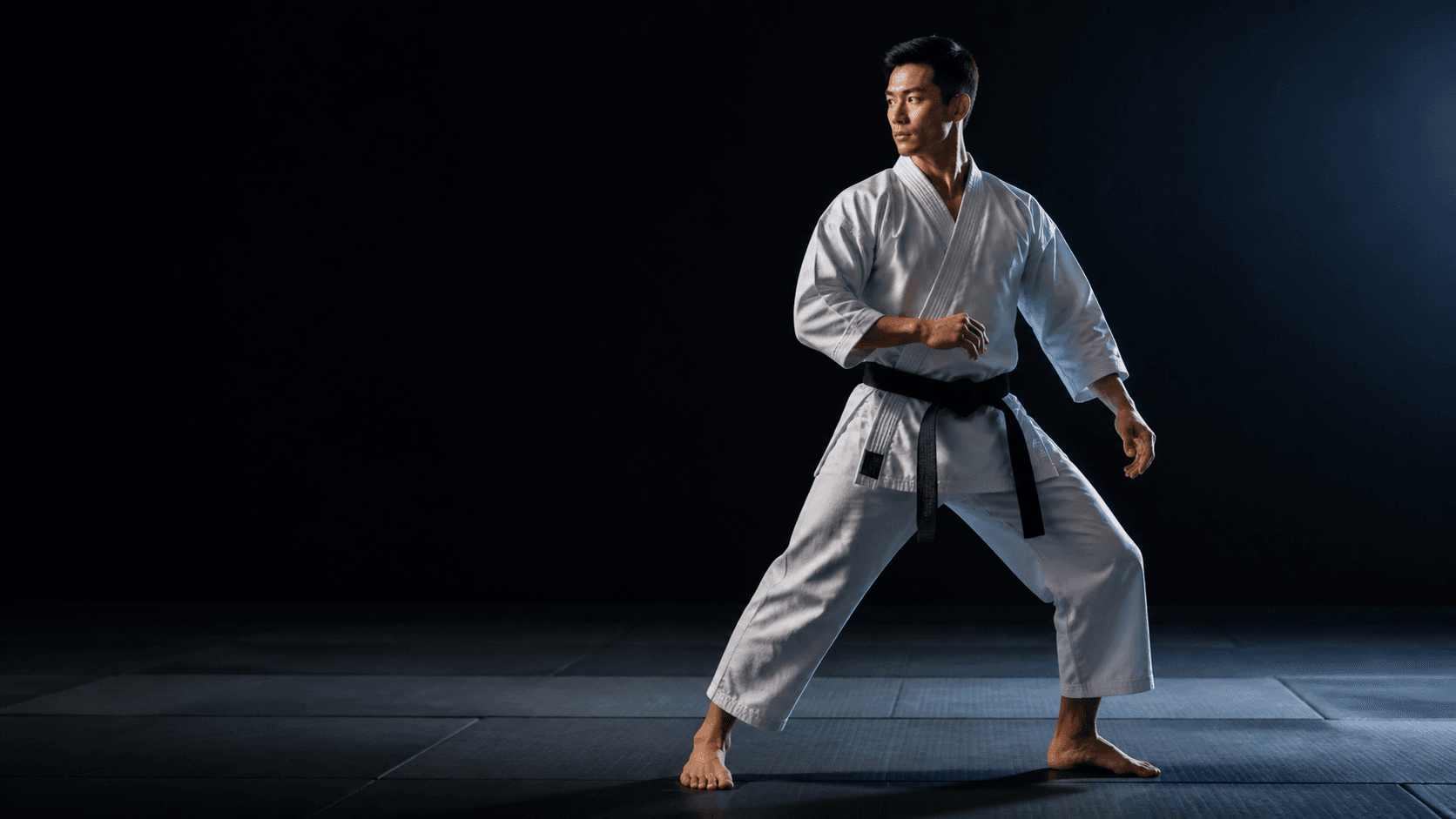
Kime: The Science of the Focus Moment in Karate
Kime gets called focus, but it is a specific physical event: a brief whole-body lock at the instant a technique lands. The two-phase mechanics behind it, why timing beats effort, and the injury cost of getting it wrong.
Every karateka has heard "kime" shouted across the dojo, usually right after a punch that looked sharp but somehow did not look finished. Kime gets translated as focus or decision, and neither word tells you what your body is actually supposed to do. It is not a mood or a facial expression. It is a specific physical event, and once you understand the mechanics of it, you can train it on your own instead of waiting for a sensei to point out that it is missing.
What Kime Actually Is
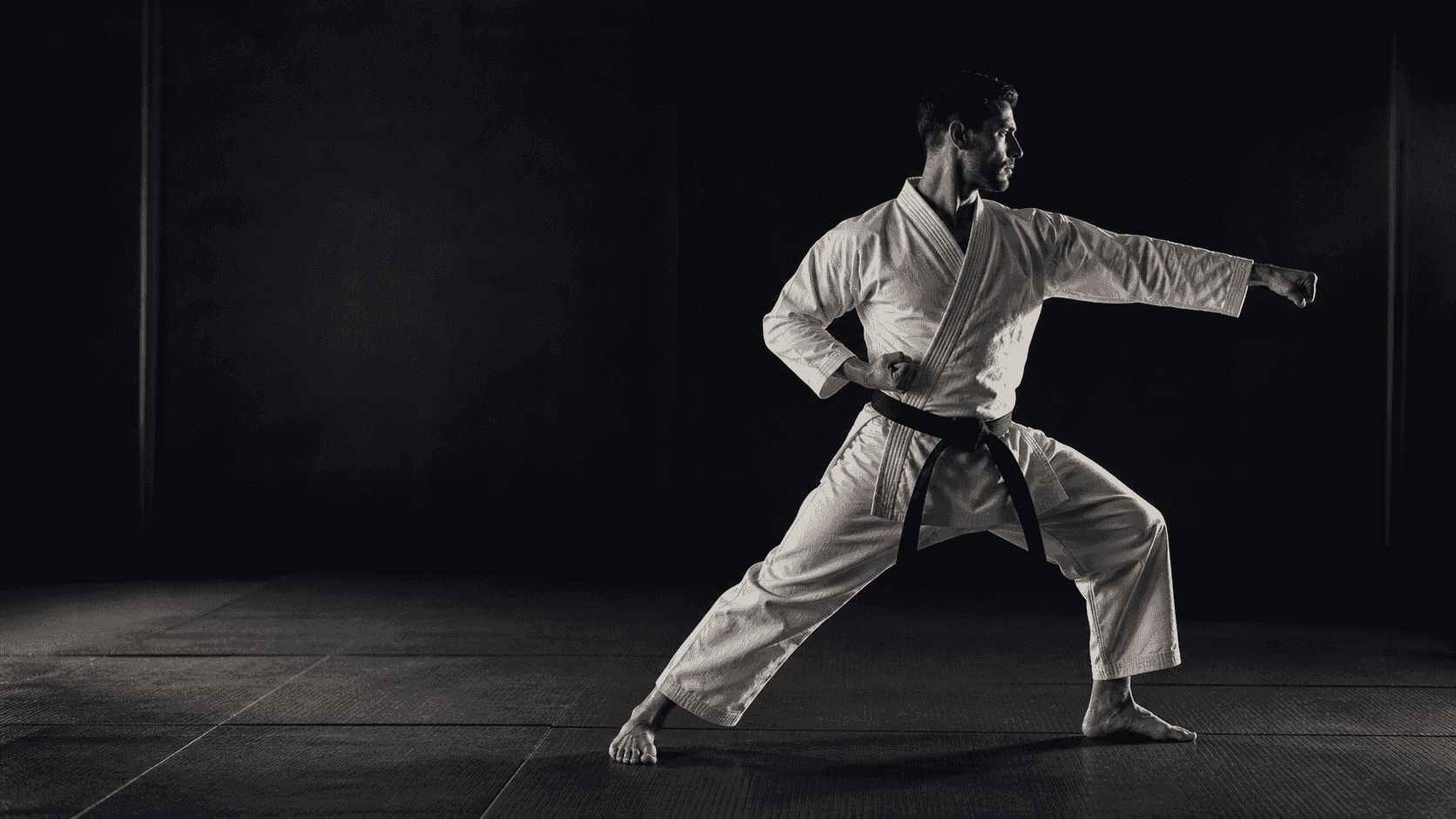
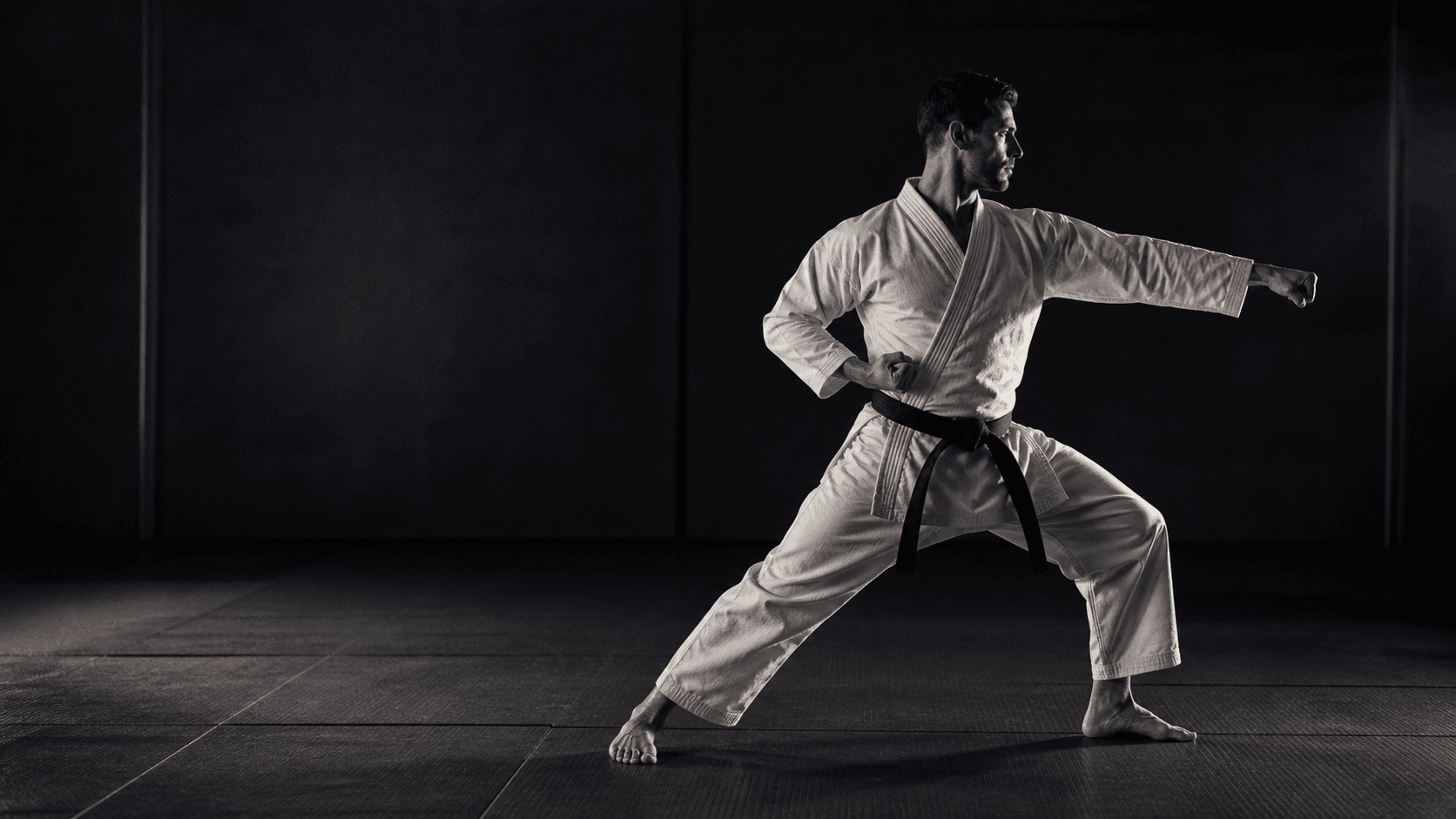
Kime is the brief, whole-body contraction that happens at the exact moment a technique reaches its target, or its full extension in the air. For a fraction of a second, the muscles that were relaxed and moving fast switch to a hard, synchronized brace: the core locks, the striking limb's joint stabilizes, the supporting leg drives into the floor, and the breath is held or exhaled sharply. Then it releases just as fast. That brace-and-release is what separates a technique that looks fast from one that actually transfers force, and it is what separates a strike that looks strong from one that is actually safe for the joint doing the striking.
The Two Phases: Acceleration and Lock
Every committed technique has two biomechanical phases. The first is acceleration: the hips and shoulders rotate, the limb whips out, and the muscles around the moving joint stay relatively loose so the segment can move fast. Speed and looseness go together here. The second phase is the lock: as the limb approaches full extension or contact, the agonist and antagonist muscles around the joint co-contract, stiffening it in a fraction of a second. This is what stops a punch from finishing as a hyperextended elbow and what turns a fast-moving fist into a surface that transfers momentum instead of absorbing it uselessly.
Karateka who never developed this timing usually fall into one of two patterns. Either they stay tense the whole way through the technique, which slows the acceleration phase and produces a strike that is stiff but not fast, or they stay loose all the way to the end, which produces a fast strike that folds or snaps at the joint on contact instead of driving through it. Kime is the skill of keeping those two phases separate and switching between them on time.
Why Timing Matters More Than Effort
A common mistake, especially among newer students doing kata, is to try to make kime bigger by squeezing harder. More muscular effort at the wrong moment does not fix a timing problem. A punch that tenses too early travels slower because the muscle is fighting itself for the second half of the movement. A punch that tenses too late arrives with no lock at all, and the joint absorbs an impact it was never braced for. The fix is almost never tense more. It is tense later, and only for an instant.
This is also why kime looks effortless on an experienced karateka and effortful on a beginner. The experienced practitioner is not working harder at the end of the technique. They are working at the right time, for a much shorter window, which reads visually as sharper and sounds different in the fabric of the gi.
The Injury Picture
Repeated technique with no lock, or a lock that arrives too late, is one of the quieter ways karateka accumulate wear at the elbow and knee. A punch thrown at full speed into empty air, with no target to stop the limb and no timely co-contraction to stop it either, leaves far more of the deceleration to the joint capsule and surrounding ligaments. Over thousands of repetitions across years of training, that adds up. This is one of the practical reasons kata is not just aesthetic performance: correct kime protects the joints doing the work, technique after technique, class after class.
Training Kime Without a Partner
Kime is trainable in isolation, and most of the drills do not need equipment.
- Throw single techniques at half speed and exaggerate the moment of lock, feeling exactly which muscles brace and for how long, before trying it at full speed
- Punch or kick a heavy bag occasionally, with your hands protected, even if your usual training is kata-heavy, so your body learns what a real stopped limb feels like
- Film yourself from the side doing five repetitions of the same technique and watch for a visible, brief pause at full extension, not a gradual slowdown
- Practice one technique per session at roughly seventy percent speed with full kime, since slowing the acceleration phase makes the lock phase easier to feel and time correctly
What to Watch For in Your Next Class
Watch your own supporting leg on your next kata run-through. If the ankle, knee and hip on your standing leg are not braced at the same instant your striking limb locks out, your kime is arriving late or not at all in the lower body, even if the arm looks sharp. Kime is a whole-body event, not an arm event, and the leg is usually the first place it goes missing.
If you want a coach to watch this specifically rather than trying to isolate it alone, mention it before a class at Kartal Karate Academy. A free trial class is available for anyone who wants to see how this kind of detail gets coached in person, and you can register at karatekartal.fit/en/register.