Karate for the Clumsy Kid: What Coordination Actually Looks Like at the Start
If your child trips over flat ground, can't catch a ball, and dreads team sports because of it, karate looks intimidating for exactly the wrong reason. Here is what the first months actually train.
The word parents actually use
Not every parent says "coordination." Most say something closer to "clumsy" — trips over nothing, drops things, was always picked last, struggles to copy a movement someone just showed them. It's a real pattern, and it's also the exact reason some parents rule karate out. It looks like a sport for kids who already move well. A child who can't reliably catch a ball seems like a bad match for something involving kicks, blocks and pivots.
That reasoning has it backwards. Karate is one of the more forgiving sports for a coordination-challenged child to start, and understanding why requires separating two things people usually lump together: coordination and athleticism.
Why team sports expose the problem and karate doesn't
A ball sport is unforgiving because the ball moves unpredictably and the game doesn't wait. A child who is a beat slow to track a moving object and react gets left behind in real time, in front of teammates who notice immediately when a pass goes wrong. That mismatch between the speed the sport demands and the speed the child currently has is what produces the dread, not any lack of effort.
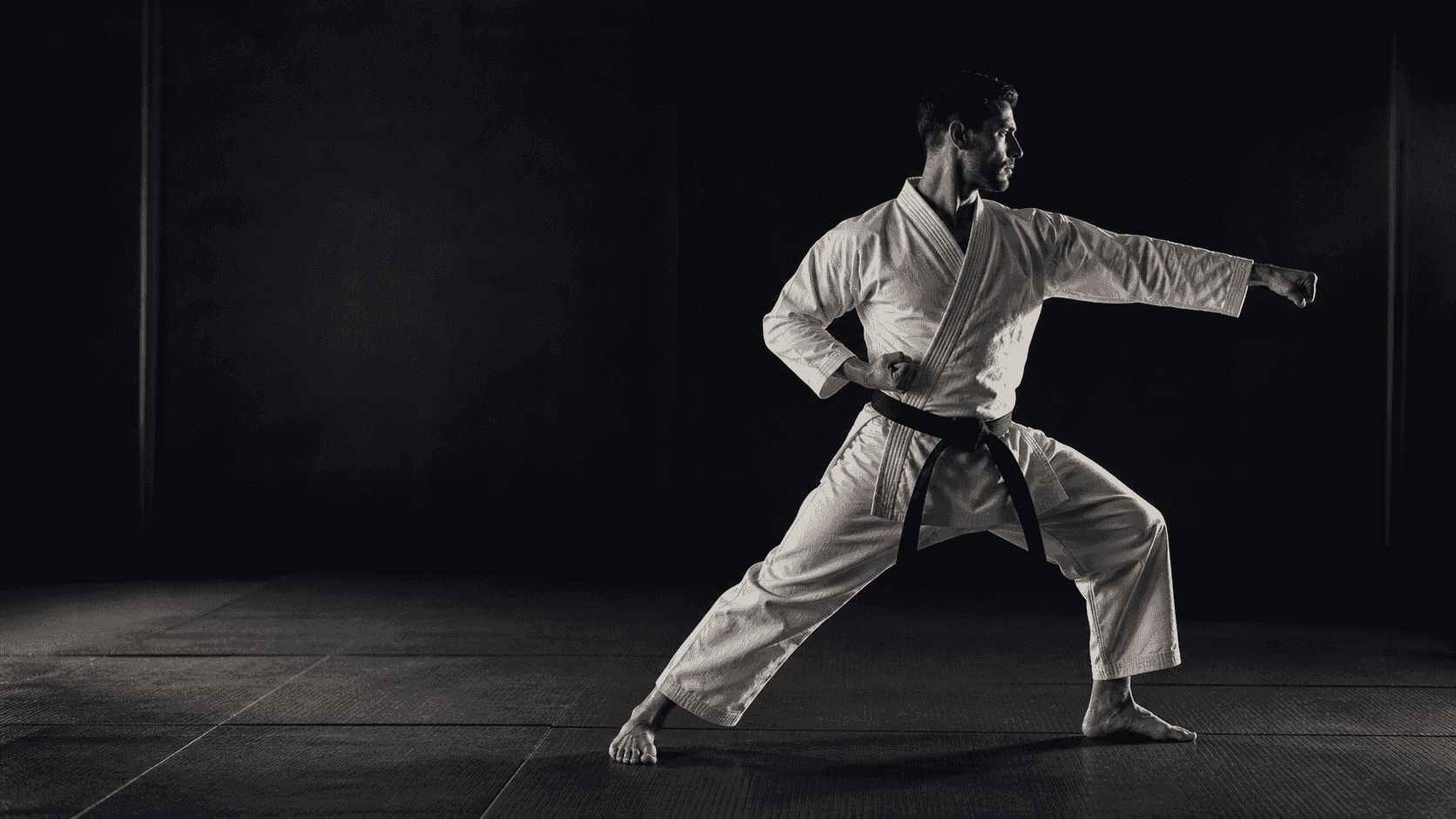
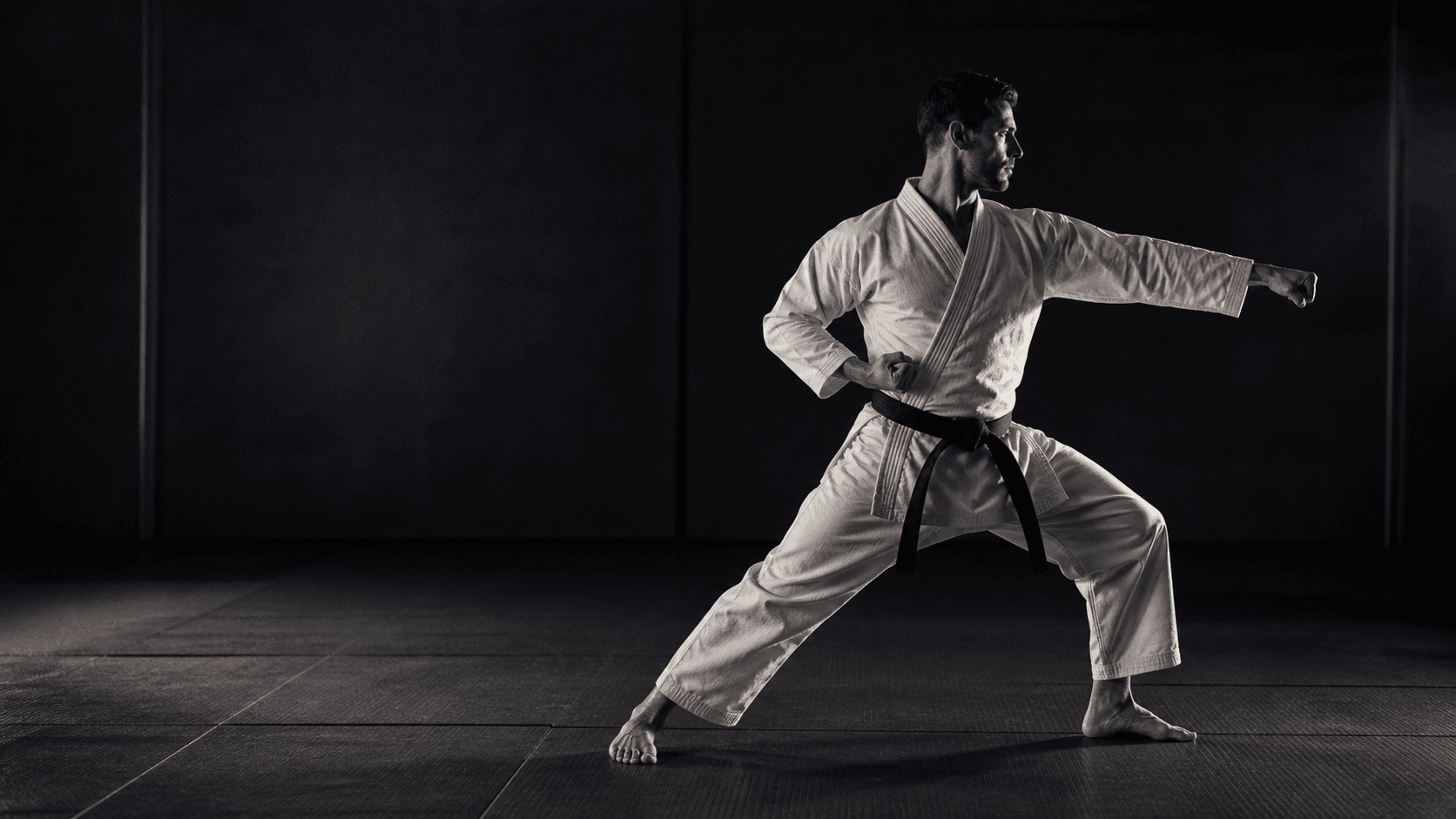
Karate removes the unpredictable object entirely. A basic technique — a stance, a block, a straight punch — is a fixed sequence a child rehearses at their own pace, alone or mirroring an instructor, with no ball, no opponent's unpredictable movement, and no teammate depending on split-second timing. The skill being built in the first months is not reaction speed. It is body awareness: knowing where your own foot is without looking at it, knowing how far your arm actually travels versus how far you think it travels. That is precisely the skill a clumsy child is missing, and it is trainable in a way that reaction speed against a moving ball is much harder to isolate and drill.
What the first weeks actually look like
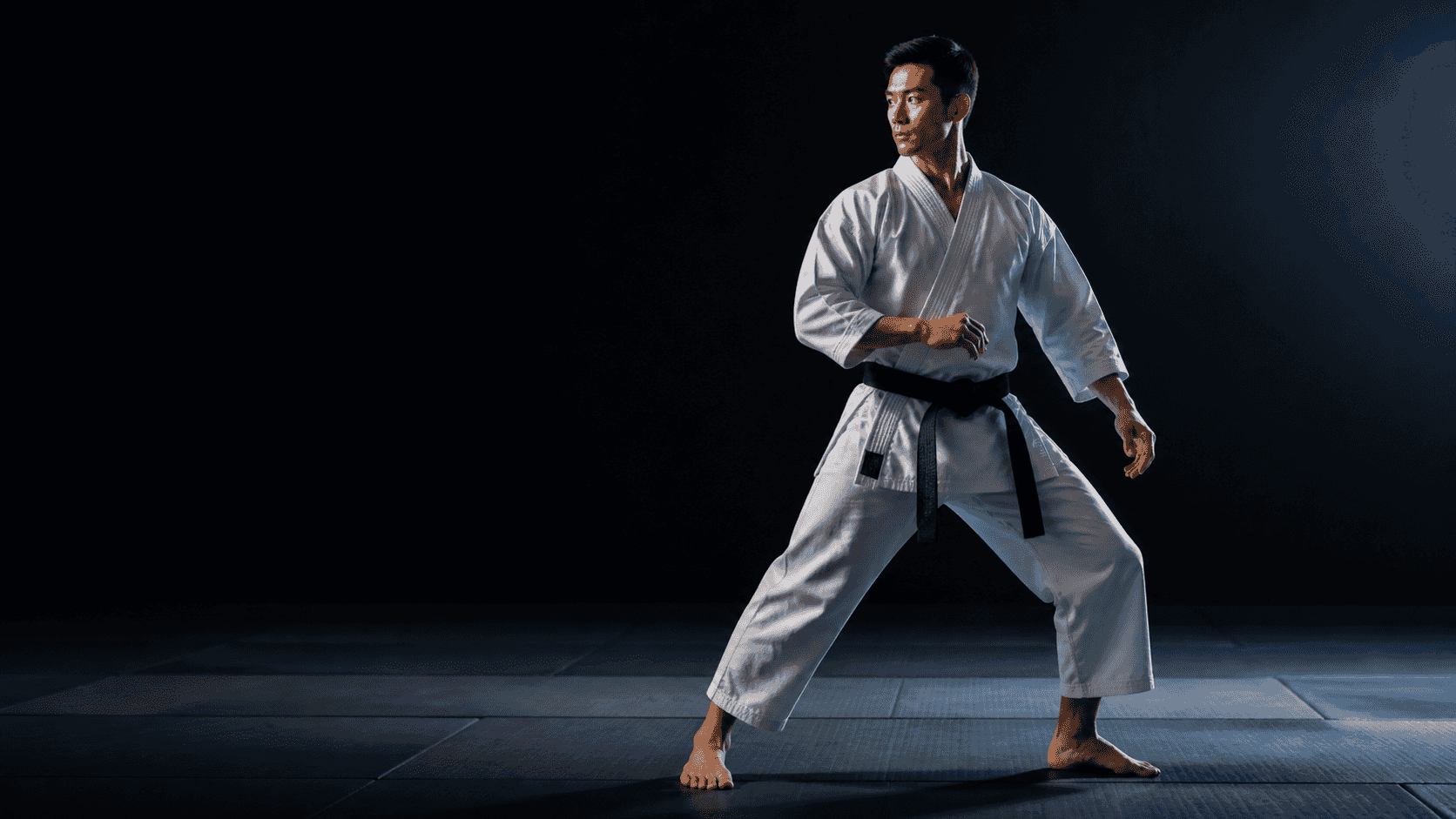
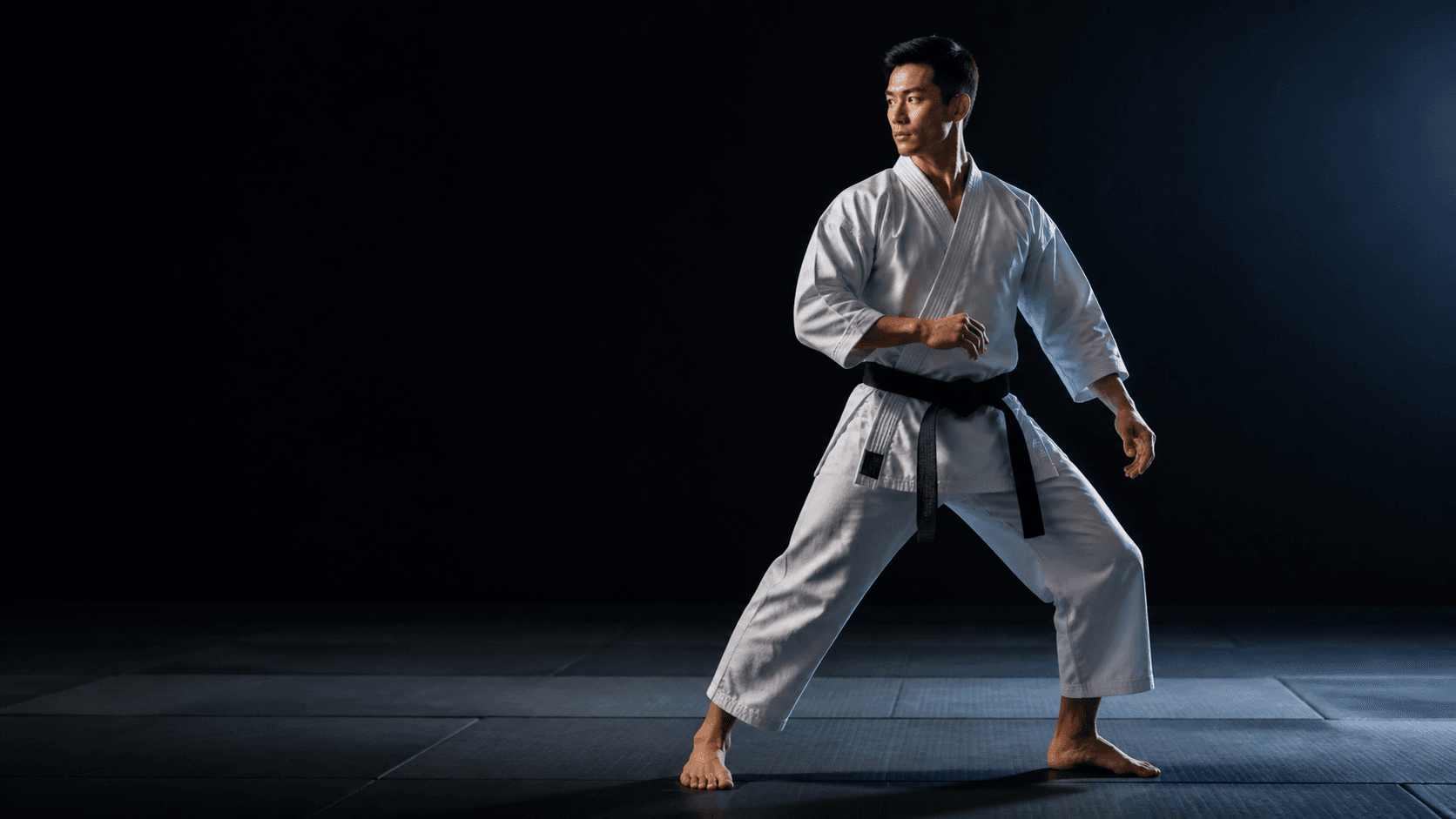
Early classes spend real time on things that look almost too basic to matter — standing in a stance without wobbling, stepping forward without crossing the feet, moving an arm through a straight line instead of a curve. For a coordinated child this is quick and slightly boring. For a child who struggles with body awareness, this is the actual work, done slowly and repeated until the movement stops requiring conscious thought.
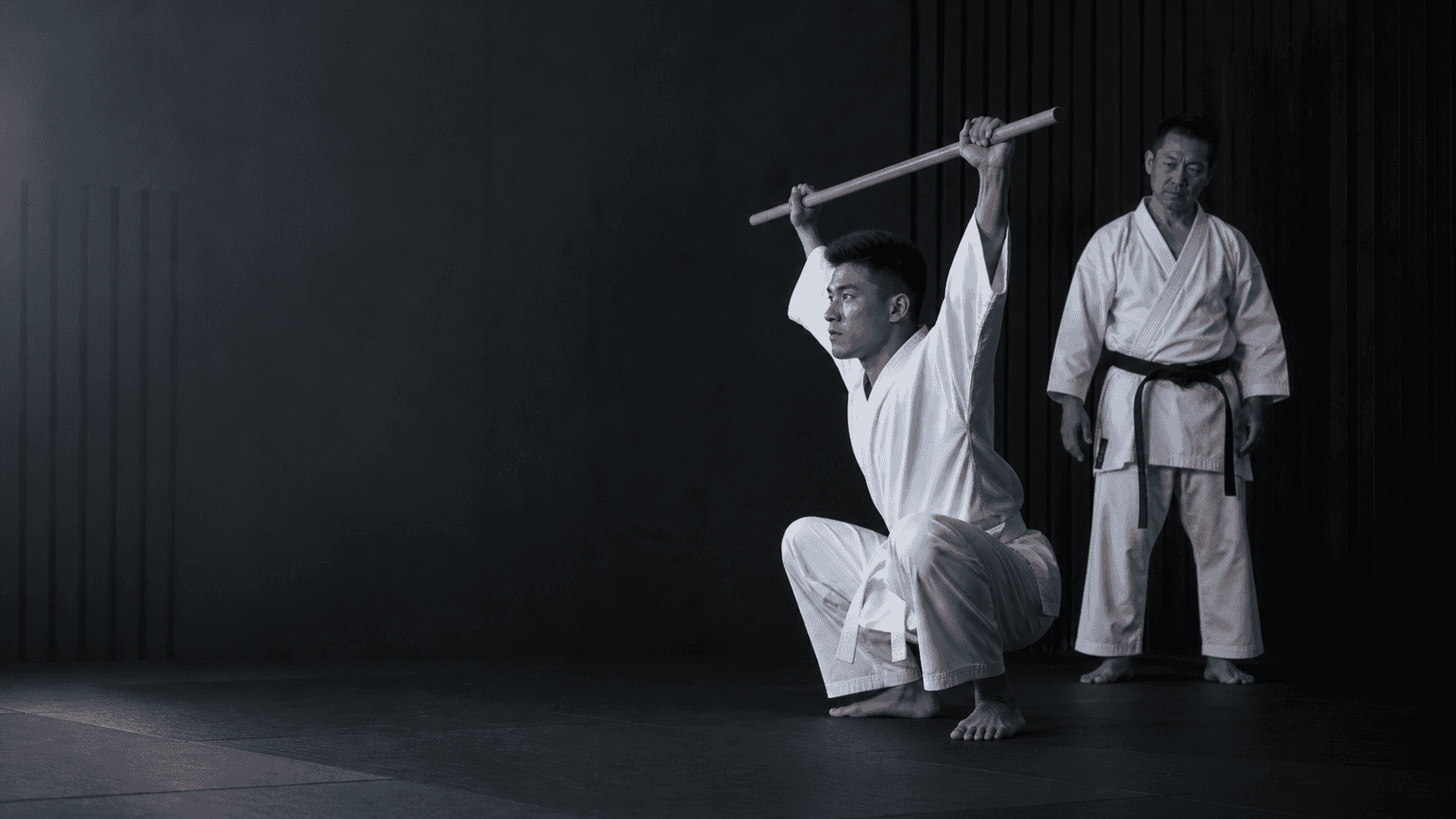
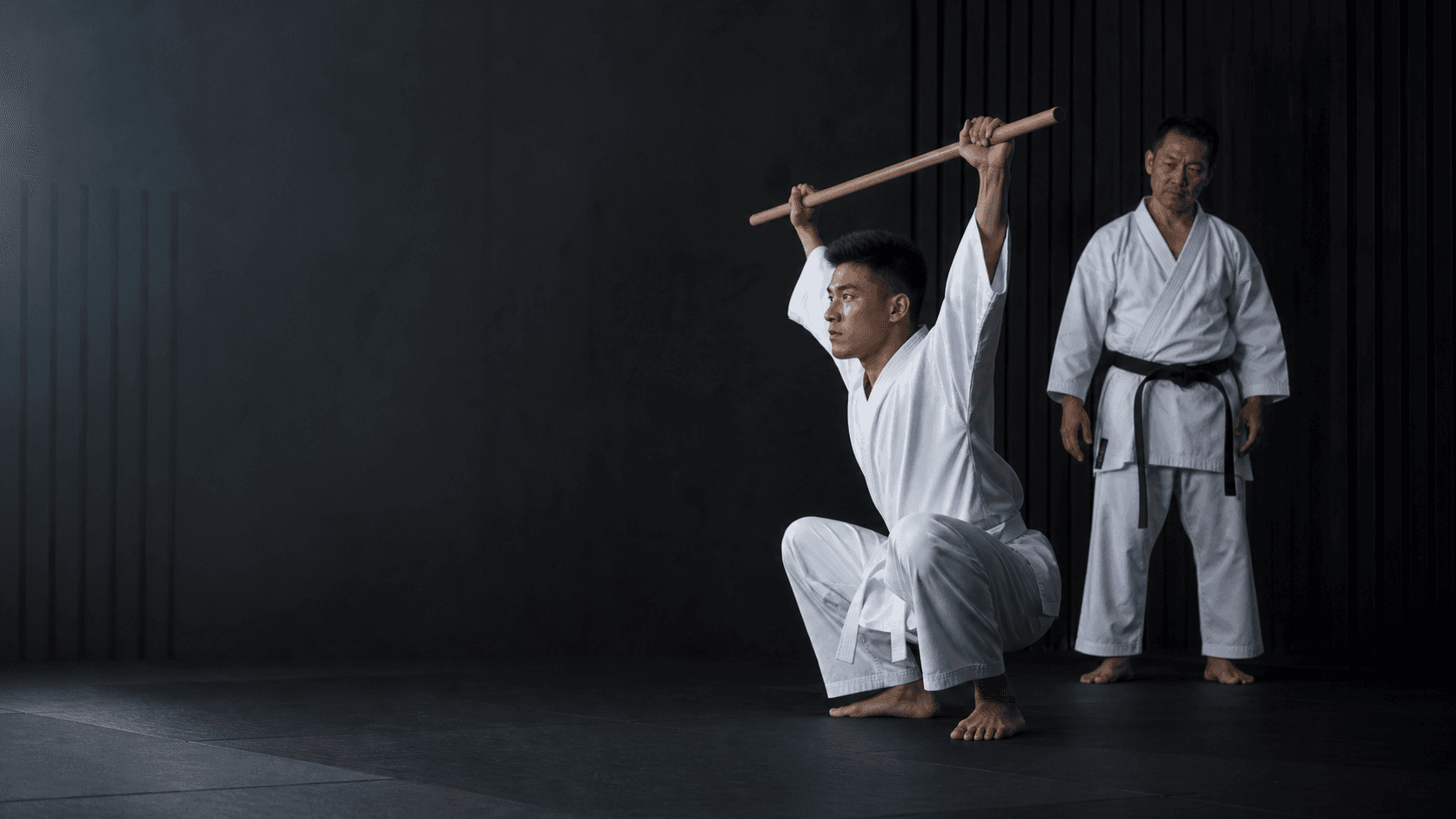
This is also where an instructor's eye matters more than for any other student in the room. A movement that looks sloppy on a clumsy child is not usually laziness — it's frequently an accurate signal of exactly which part of the coordination chain needs isolated repetition. Slowing a technique down, breaking it into smaller pieces, and rebuilding it step by step is standard practice in a children's class, not a special accommodation.
What tends to change, and on what timeline
Nobody should expect a transformation in a month. What typically shifts over a first term is narrower and more useful than "becoming coordinated" as a general trait — a child gets noticeably better at one specific thing: translating an instruction or a demonstration into their own body's movement without several attempts. That specific skill, watching something and reproducing it, is exactly what was missing in the team-sport setting, and it can carry over. The clumsiness can start to show up less in ordinary life too, not because the child became a different kind of mover overall, but because body awareness is not only a sport-specific skill.
What it doesn't fix, and what it isn't for
Karate is not a substitute for an occupational therapy assessment if the coordination difficulty is significant and consistent across every physical task — that is a different conversation, worth having with a pediatrician first. For the much larger group of children who are simply behind their peers in body awareness without any underlying condition, structured, self-paced practice is one of the more effective and low-pressure ways to close that gap.
What we see at the academy
Sensei Behzad and Sensei Homa Yaghoubian teach children who start from very different places, and a child who arrives unable to hold a basic stance without swaying is an ordinary starting point, not a problem. Nobody in our classes is being compared to anyone else's timeline. Classes run on Tuesday and Saturday, 18:00–19:00, with an adult class on Thursday, 18:00–19:00, and a free trial class is the easiest way to see how your child responds to being taught at their own pace rather than a team's pace. Register at karatekartal.fit/en/register.