Your First Month at a Karate Club in Kartal, Week by Week
Before week one
You do not need a uniform for your first class, and you should not buy one until you have decided to stay. A t-shirt and tracksuit bottoms are fine. Bare feet are standard on the mat, so cut your toenails and bring flip-flops or slides for walking to the changing area.
Eat something light about two hours before, not ten minutes before. Bring more water than you think you need, because a Kartal training hall in September is warmer than you expect. Arrive fifteen minutes early for the first session so you can watch the end of the previous group and see how the room works before you are standing in it.
That is the whole preparation list. Everything else is taught.
Week one: standing still turns out to be hard
The first week is about position, not power.
What you actually do
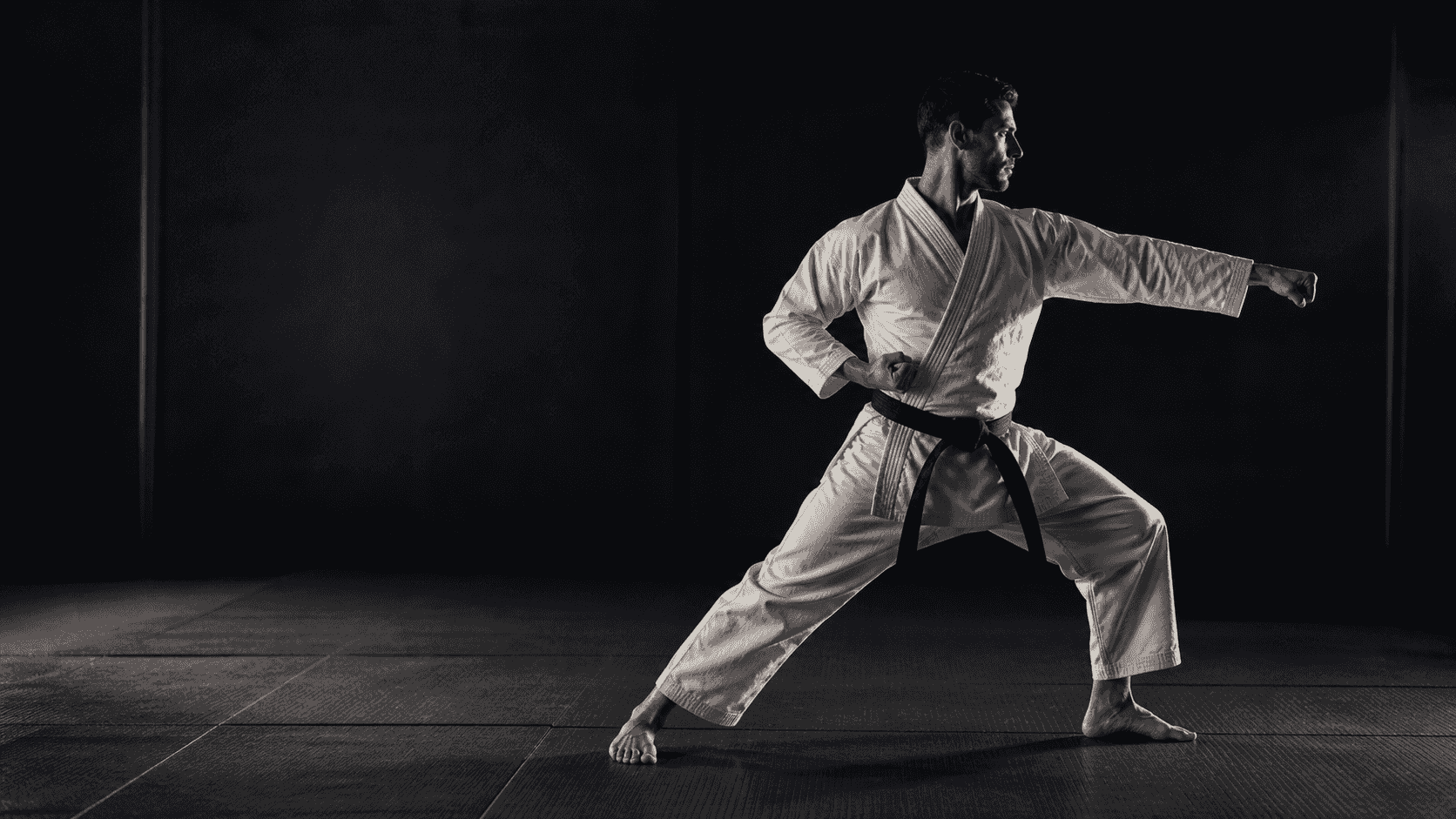
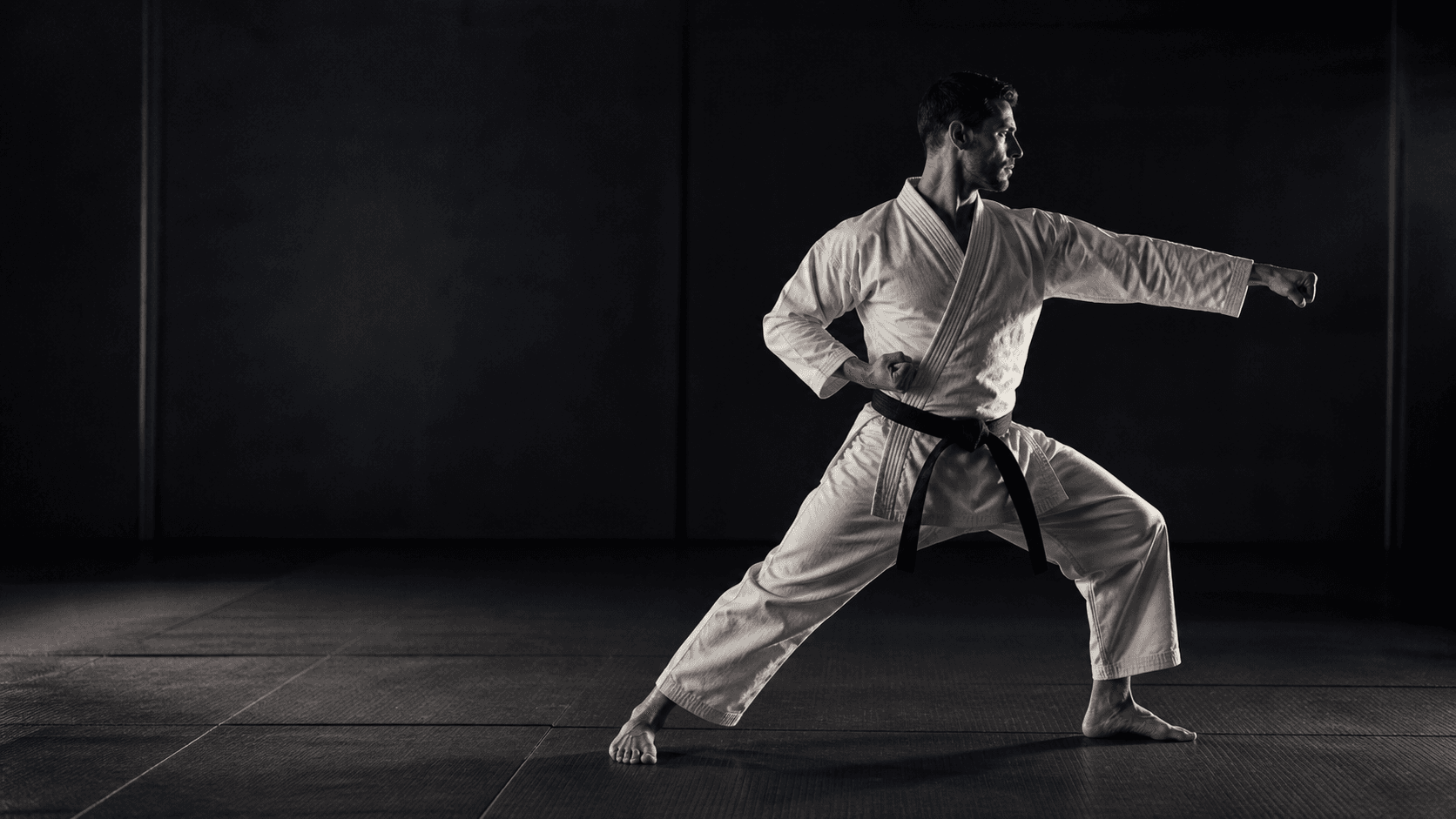
Almost the entire first class is stance and posture. Heiko dachi, the natural standing position, then zenkutsu dachi, the long forward stance that will define most of your first year. You will step forward and back across the hall in that stance perhaps thirty times, and your instructor will correct the same three things every time: front knee over the ankle, back leg straight, hips square.
Then one punch, chudan tsuki to the body, from a static position. Then one block. That is genuinely all, and it is enough.
What hurts
Quadriceps and the arches of your feet. Almost universally. The forward stance loads your front thigh in a way nothing in daily life does, and standing barefoot on a hard floor for an hour uses foot muscles that shoes have been doing the work for.
Expect two days of stiff legs after your first session. It is normal, it means the stance was low enough, and it is dramatically less after the third class.
Week two: the vocabulary arrives
Your second week is where the Japanese terminology stops being noise. Roughly fifteen words carry most of a beginner class, and you will absorb them by hearing them rather than by studying them.
- Kihon, basics, the block of repetition drills that opens most classes
- Kata, a fixed solo sequence of techniques against imaginary opponents
- Kumite, partner work, which you will not be doing yet
- Rei, the bow, and the etiquette around entering and leaving the mat
- Oss, an all-purpose acknowledgement that means understood, yes, and thank you at once
Physically, week two adds movement to what you learned standing still. Stepping punch, oi tsuki, where the punch and the step land together. This is the first thing that feels genuinely difficult to coordinate, and it is supposed to. Your arm wants to arrive early. It will keep wanting that for about a month.
Week three: your first kata
Most beginners meet their first kata in the third or fourth week, usually one of the Heian or Taikyoku forms depending on the style.
A first kata is around twenty moves. You will learn it in pieces, four or five moves at a time, over two or three sessions. Nobody remembers it in one go, and the person next to you who seems to have it already learned it last month.
What kata does, and this is the part beginners underestimate, is train direction changes under load. Turning cleanly while holding a low stance is a balance and hip-control problem, and it is the single fastest way beginners improve their legs. You will also discover which side of your body is weaker, because everyone has one and kata is symmetrical enough to expose it in about ninety seconds.
Week four: it starts to hold together
By the fourth week three things have usually changed.
- You stop looking at your feet. Your body knows roughly where the stance is without your eyes checking.
- You can follow a full class without copying the person beside you a half-beat late.
- Your recovery time drops sharply. Post-class stiffness goes from two days to a few hours.
Week four is also usually when controlled partner distance work begins. Not sparring. You stand facing a partner, one person steps and punches to a fixed target, the other steps back and blocks. It is choreographed, slow, and the entire point is learning to judge distance. Real sparring is months away, and any club that puts a four-week beginner into free fighting is not managing risk properly.
What you will not have after a month
Honesty is more useful here than encouragement.
After four weeks you will not have a usable fighting ability, a high kick, or anything close to a coloured belt in most clubs. Your first grading is typically three to five months in, not one.
What you will have is a stance that no longer collapses, a punch that goes in a straight line, one kata you can get through, noticeably stronger legs, and a clear sense of whether this is your thing. That last one is the real output of the first month.
The three mistakes that cost beginners the most
- Missing week two. The gap between the first and second class is where most beginners quietly drop out. The first class is exciting, the second is where the work starts, and skipping it makes the third feel like starting again.
- Training through sharp pain. Ache is fine. Sharp is not. Tell the instructor, take the modified version, keep coming.
- Comparing yourself to the person one row ahead. They are three months in. In three months there will be someone comparing themselves to you.
Your first month starts with one free class
Kartal Karate Academy trains at Yakacık Spor Kulübü, Spor Cd. No:4, Cumhuriyet Mahallesi, Monday to Saturday between 09:00 and 21:00, with groups for children, adults, self-defence and conditioning. Sensei Behzad Yaghoubian and Sensei Homa Yaghoubian, both international karate champions, run the beginner sessions.
The trial class is free and there is nothing to buy beforehand. Register at karatekartal.fit/en/register or call +90 501 366 56 30.