Will Karate Fix Your Desk-Job Posture? An Honest Look
The question behind the question
A good number of the adults who call Kartal Karate Academy about the free trial class are not really asking about karate. They are asking about their back. Nine or ten hours at a desk, a commute across the Anatolian side that adds another hour of sitting in a car or a minibus, and by the time they get home their lower back is tight, their shoulders are rounded forward, and someone told them martial arts might help. It is a fair question. The honest answer is: partly, slowly, and not by itself.
What desk sitting actually does to you
Long sitting shortens the hip flexors, weakens the muscles that hold your shoulder blades back, and lets the upper back round into a fixed slouch your body starts to treat as normal. None of that is dramatic on its own. The problem is that it becomes your default posture even when you are not sitting — standing in a queue, walking to the bus stop, holding a conversation. Your body reverts to the shape it holds for nine hours a day, because that is the shape it has practiced the most.
What karate stances change
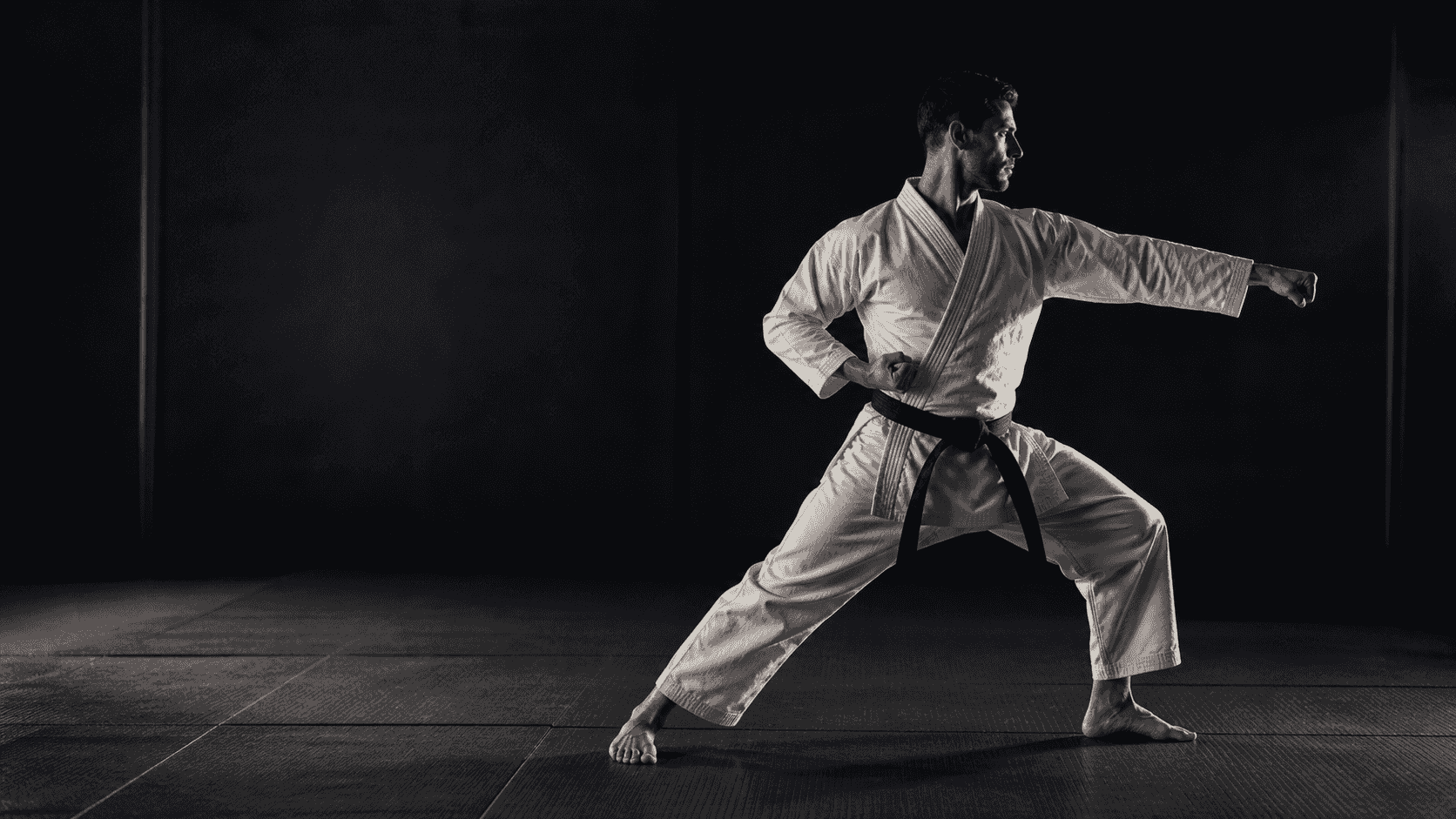
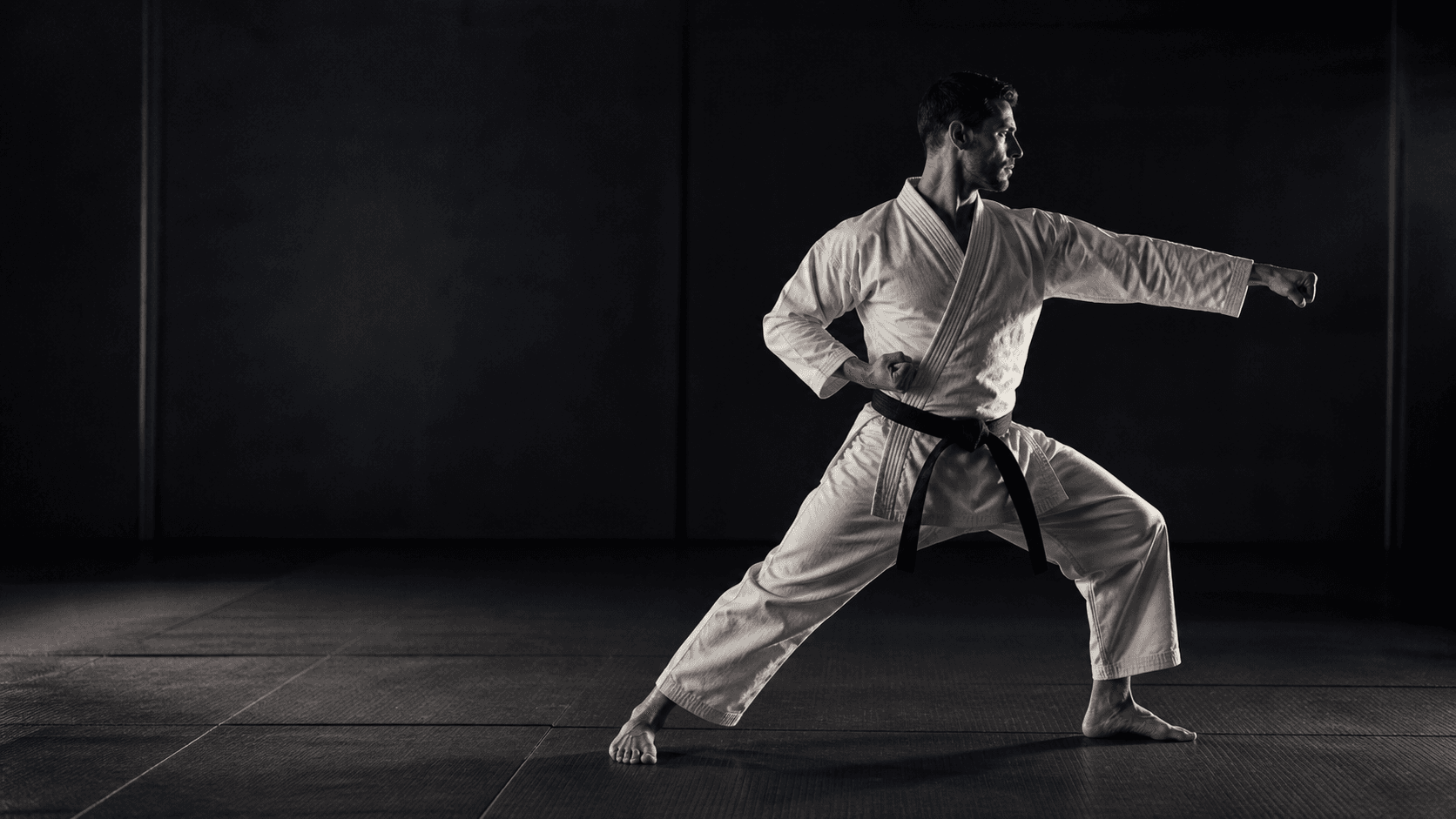
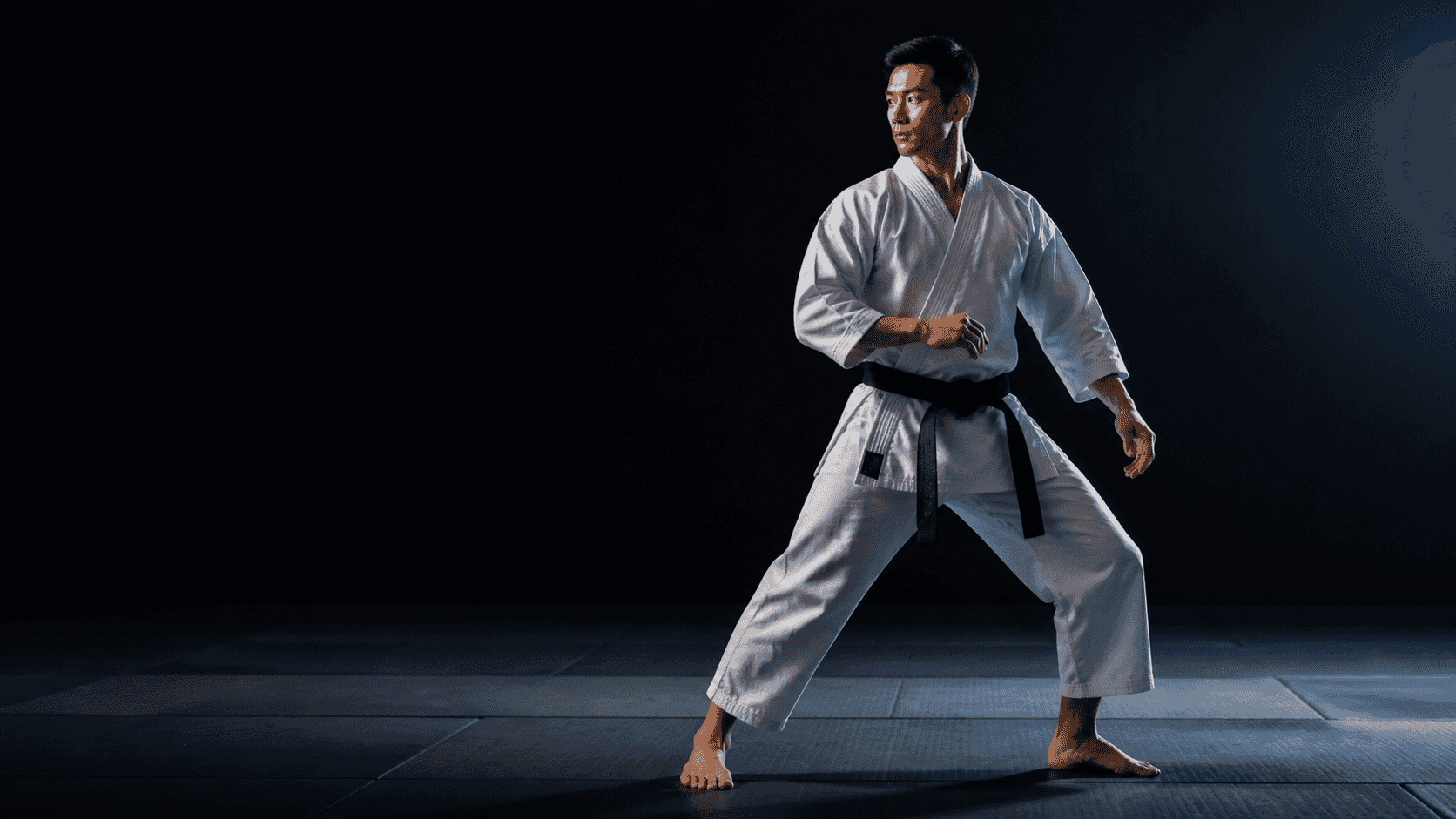
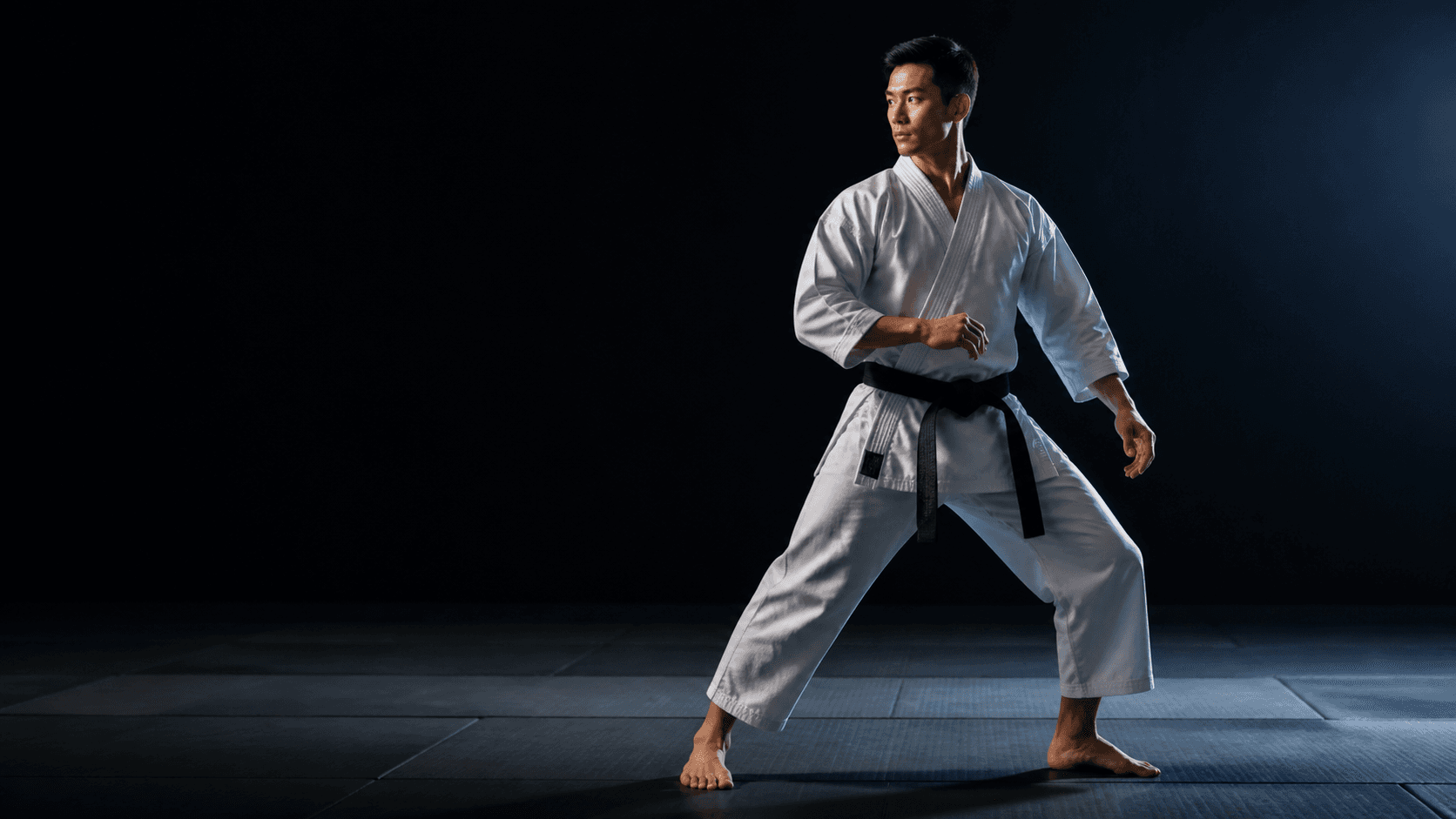
Karate spends a lot of time in stances — zenkutsu dachi, kiba dachi, and others — that ask for the opposite of a desk posture: hips open rather than folded, spine tall rather than curled forward, shoulders down and back rather than hunched over a keyboard. Repeating these positions, several times a week, is genuinely useful counter-practice for a body that has learned to slouch. The rotational movement in punches and turns also works the thoracic spine — the upper-back segment that stiffens first from sitting — through a range of motion a desk chair never asks for.
This is why a lot of adult students notice, after a few months, that standing tall feels less like an effort and more like a default. That is a real, physiologically plausible effect. It is also slow. Nobody leaves their third class standing differently. The change shows up the way most posture change does — gradually, and mostly noticed by other people before you notice it yourself.
What it will not do
Karate is not physiotherapy, and a class of twelve to twenty people moving through a warm-up is not a substitute for one-on-one correction of a specific problem. If you already have a diagnosed issue — a herniated disc, sciatica, a previous back injury a doctor has treated — get that doctor's clearance before you start, and tell your instructor about it on day one, not after the second class when something twinges. Stances that are excellent for a healthy back can aggravate a compromised one if nobody adjusts them for you. This is not a reason to skip karate; it is a reason to be specific with your instructor instead of quietly pushing through pain and hoping the technique itself will sort it out.
It is also worth being honest that karate will not undo eight hours of daily sitting on its own. Two classes a week improve your baseline mobility and strength, but if you go straight back to a slouched desk chair for the other six days, you are working against yourself. The people who see the clearest change are the ones who also stand up and move during the workday, not just the ones who show up to class.
What actually fixes posture is movement variety spread across the whole day, not a single intense session bracketed by nine hours of stillness. A body that sits all day and then does one hard workout is still, for the other twenty-two hours, practicing the posture it is trying to escape. Karate helps most when it is one part of a day that also includes standing up every hour, walking instead of sitting through a phone call, and simply changing position often. None of that requires extra time — it requires noticing.
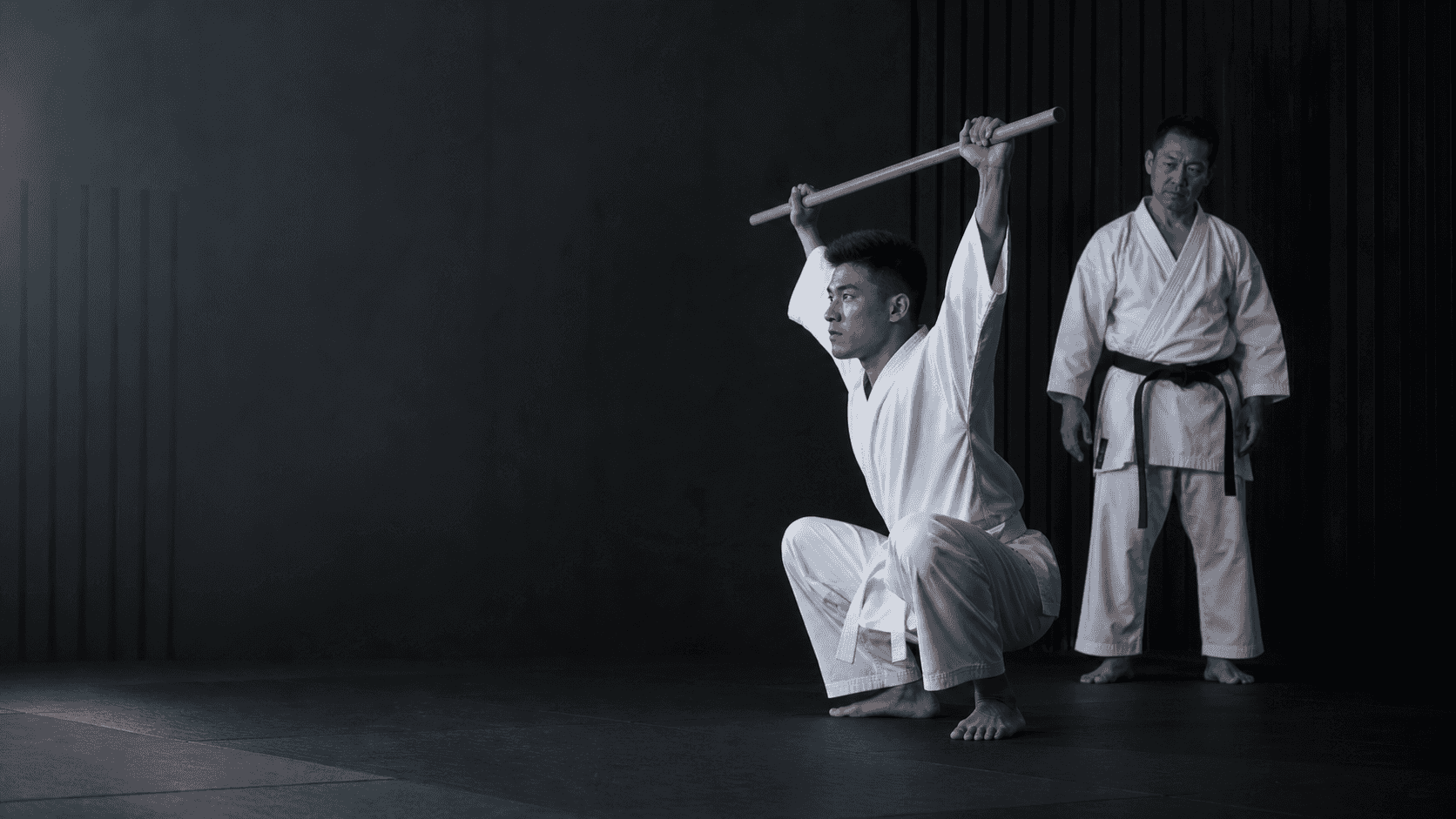
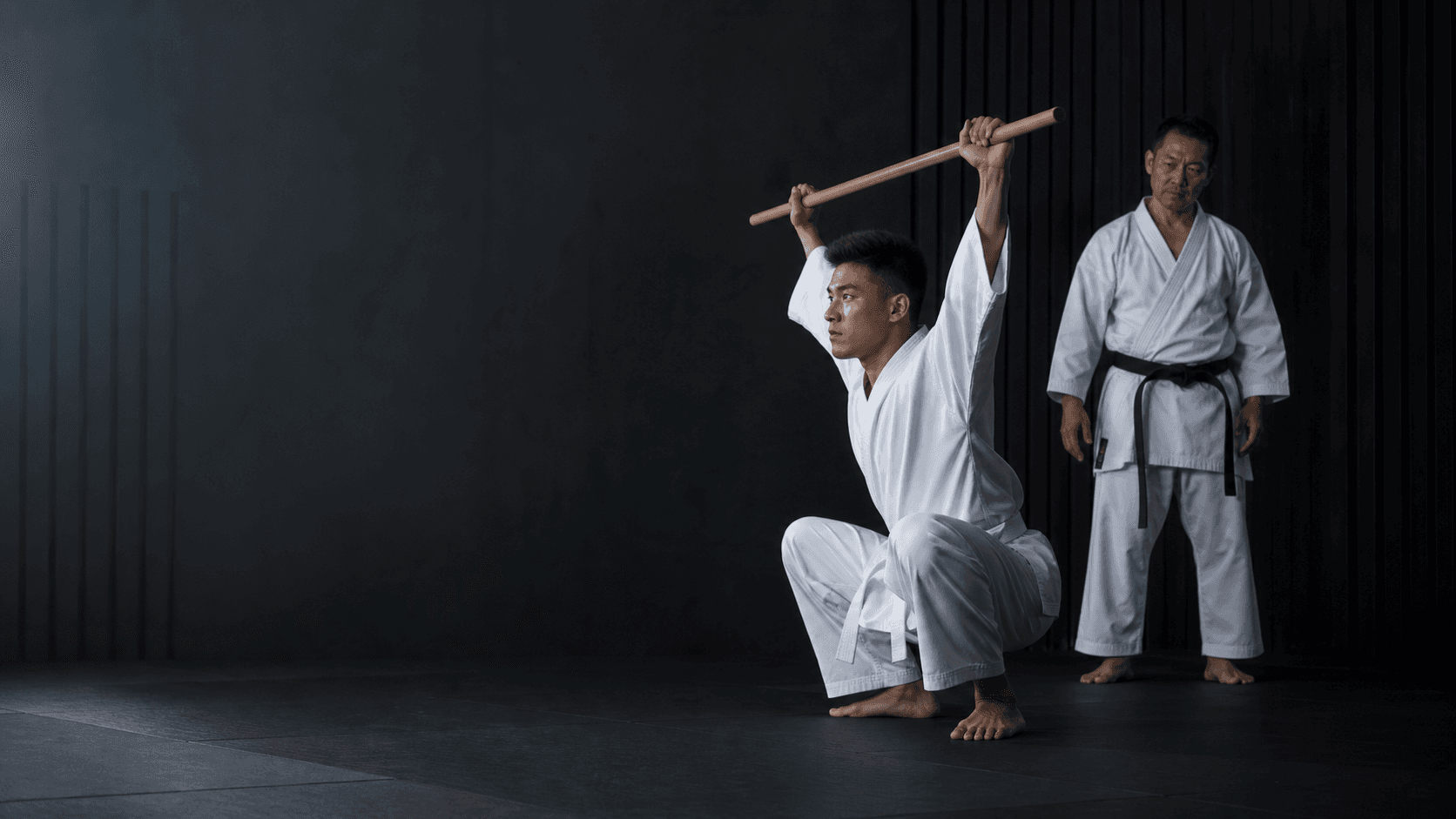
Load management matters too, and it is where a well-run class actually helps rather than hurts. A good instructor does not ask a stiff, desk-bound beginner to sit as low in kiba dachi as someone who has trained for years, or to twist through a full range on day one. Progress in stance depth and rotation should be gradual, matched to what your hips and spine can currently do. Rushing it is how a class meant to help your back ends up straining it instead — another reason to say what is going on with your body rather than trying to keep pace with the room.
What to actually do between now and your first class
You do not need to wait for your trial class to start helping your back. A few habits, done consistently, make the eventual training more useful rather than less:
- Stand up once an hour, even for thirty seconds. Set a phone reminder if you have to.
- Walk during phone calls instead of sitting through them.
- Notice your sitting posture mid-afternoon, when it has usually collapsed the most, and reset it rather than waiting until you feel pain.
- Mention any existing back, hip or neck issue to the instructor before the class starts, not partway through it.
- Wear clothing you can move freely in for the trial class — this is not the day to test how your work trousers handle a stance.
- Arrive without having sat in traffic for the hour right before class if you can help it; a short walk beforehand loosens what the commute tightened.
None of these are dramatic changes. That is the point — posture built over years of sitting is undone the same way it was built, in small repeated doses, not in one session.
Booking the trial
If your back is the real reason you are considering this, say so when you book the free trial. Sensei Behzad and Sensei Homa can tell you honestly, after watching you move, whether your particular stiffness is the kind karate helps or the kind that needs a physiotherapist first. Classes run Tuesday and Saturday, 18:00–19:00, with an adult class on Thursday at 18:00–19:00, at Yakacık Spor Kulübü in Kartal — close enough for an after-work session that does not eat your whole evening. You can register for the free trial at karatekartal.fit/en/register.