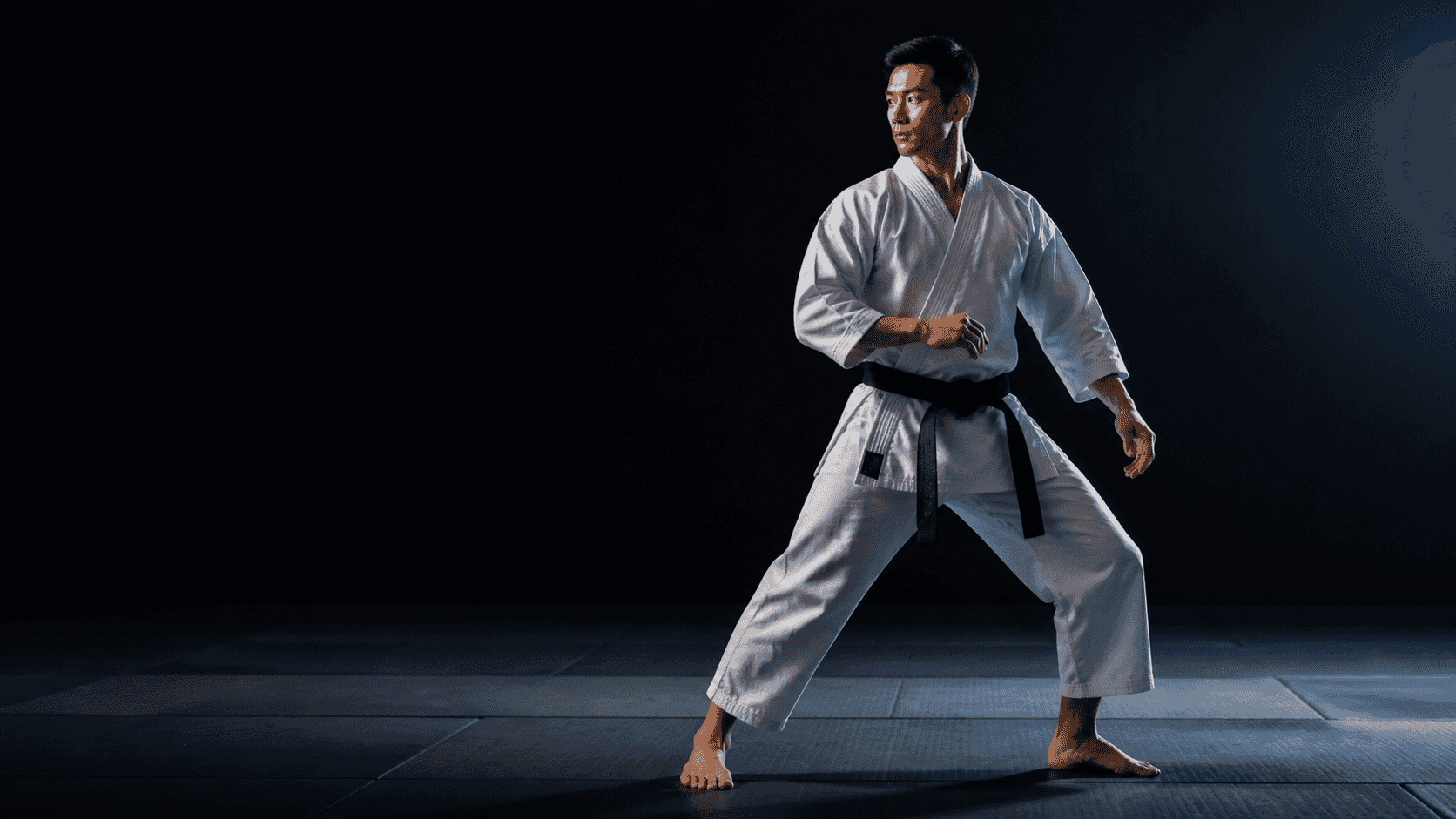
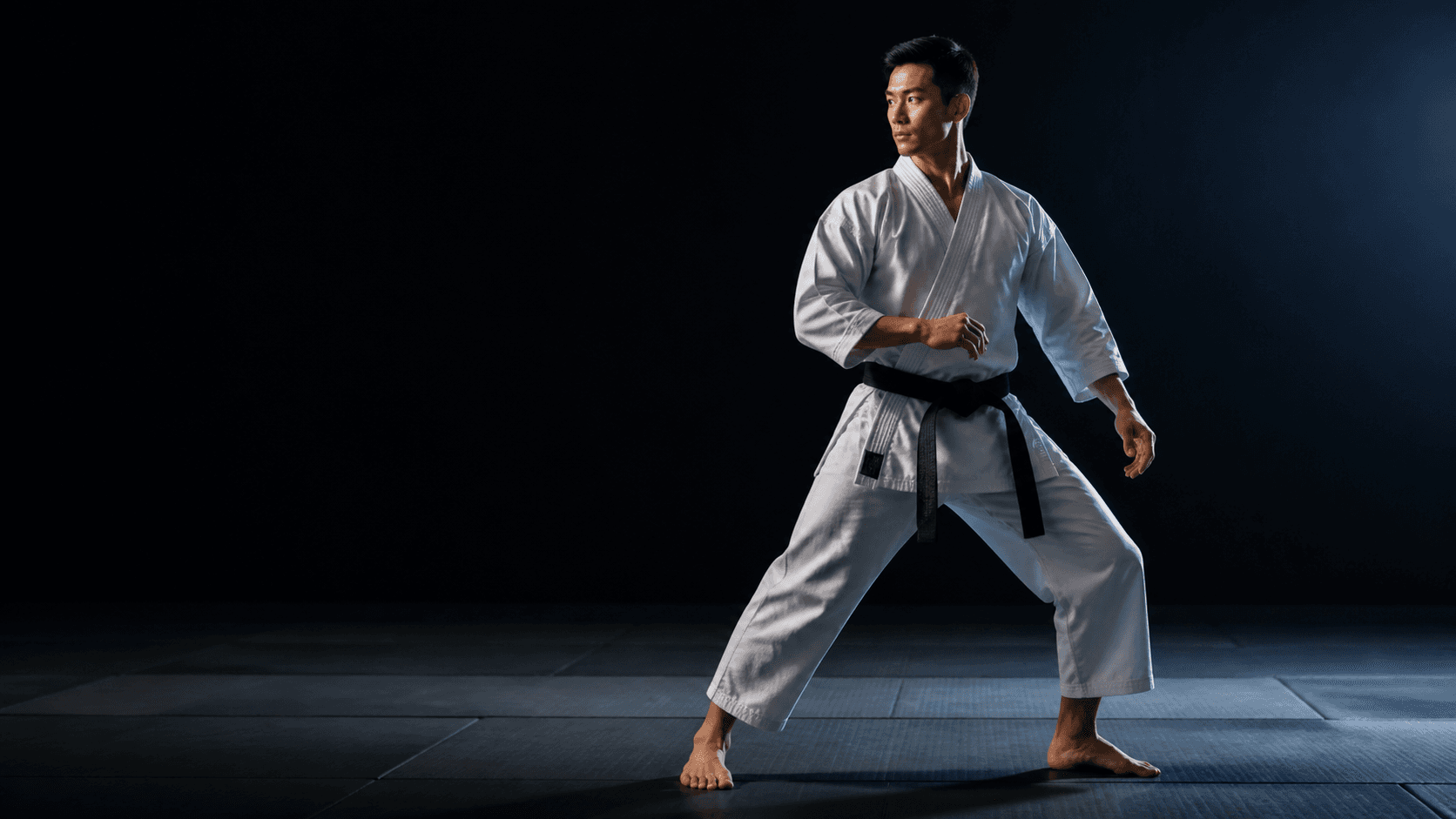
The Achilles Spring: Elastic Energy and the Kumite Push-Off
The push you feel is not the push that matters
Ask a karateka what powers a fast entry in kumite and most point to the thigh. The quadriceps straighten the front knee, the glutes drive the hip forward, and that is the part you can see and feel working. What is easy to miss is the joint doing the most time-critical work of all: the ankle, and specifically the Achilles tendon crossing it.
The Achilles is not a passive rope connecting calf muscle to heel. It behaves like a spring. When your back foot loads into the floor just before you move, the tendon stretches slightly under tension, storing mechanical energy the way a compressed spring stores it. When that tension releases, the tendon recoils and returns much of that energy almost instantly, faster than the calf muscle itself could contract and shorten on its own. This is called the stretch-shortening cycle, and it is the single biggest reason explosive movement feels different from strong movement.
Why this matters more in karate than it looks
A slow push off the back foot uses mostly muscle: the calf contracts, force builds gradually, and the body accelerates over a relatively long time window. A fast entry uses the tendon: a brief, sharp loading phase followed by an almost immediate release, so force appears in a fraction of the time. In kumite, where the gap between seeing an opening and losing it can be a tenth of a second, that difference between muscle-driven and tendon-driven push-off is the difference between arriving and being too late.
This is also why two karateka with similar leg strength on a gym machine can look completely different on the mat. Strength testing usually measures how much force a muscle can produce under slow, controlled loading. It says almost nothing about how well someone uses the stretch-shortening cycle, which is a timing skill and a tissue-stiffness quality, not a raw strength quality. A karateka can be strong and still be slow off the line if the ankle absorbs the loading phase instead of springing out of it.
What actually trains tendon spring
Tendon stiffness and the timing of the stretch-shortening cycle respond to a narrower category of training than general leg strength does.
- Short, reactive ground contacts. Low box hops, ankle-dominant pogo jumps, and quick skipping drills that emphasise minimal ground contact time train the tendon to load and release fast rather than slow and controlled.
- Isometric holds at long and short calf lengths. Holding tension in a raised-heel or stretched-heel position for several seconds builds the tendon's capacity to tolerate load without excessive stretch, which is part of what makes the recoil efficient.
- Movement-specific loading, not just gym loading. The stretch-shortening cycle is somewhat pattern-specific. Practising the actual back-foot load and drive used in your kumite entries trains the timing in the exact joint angles and speeds you will use, which a generic calf raise does not fully replicate.
- Patience with tendon adaptation. Tendon tissue remodels more slowly than muscle does. Where a strength gain might show up in weeks, a meaningful change in tendon stiffness and elastic return usually takes months of consistent, appropriately loaded training. Rushing this with excessive plyometric volume is one of the more common ways young karateka develop Achilles or heel pain.
What to feel for in your next class
Pay attention to your back foot in the moment just before you commit to an entry. There should be a brief, almost silent loading sensation through the calf and heel, then a release that feels like the floor gave something back to you rather than you having pushed it away entirely on your own. If your entries feel like you are always shoving off flat-footed, with a slow build of force before you actually move, that is a sign the loading phase is happening but the spring is not releasing efficiently, and reactive ankle work is likely to help more than heavier squats.
Coaches watching a class can look for the same thing from the outside. A karateka whose heel stays in prolonged contact with the floor during the load, then rises slowly, is pushing with muscle. A karateka whose heel barely settles before the whole foot springs away is using the tendon the way it is designed to be used.
Where this fits in your training week
You do not need a separate plyometric program to start building this. Adding two to three minutes of light, ankle-dominant hopping to your warm-up, several times a week, is enough stimulus to begin adapting tendon stiffness without adding meaningful fatigue before class. What matters more than volume is consistency and keeping the contacts genuinely quick, not turning them into a strength exercise by staying on the ground too long between hops.
If you want to see this mechanism up close, a free trial class at Kartal Karate Academy is a good place to start, with instructors who can watch your entries and tell you specifically whether your back foot is springing or pushing. Register at karatekartal.fit/en/register.