Do You Need to Be Flexible to Start Karate?
If you have ever looked up a karate class near Kartal and then talked yourself out of going because you pictured a room full of people doing the splits, you are not alone. It is one of the most common reasons adults never make it to a first class: the assumption that karate requires a flexibility you do not currently have, and that showing up without it will be obvious to everyone in the room.
The Question Behind the Question
Ask most adults why they are not flexible enough for karate and they will not talk about karate at all. They will talk about years at a desk, a hamstring that has not touched their toes since school, hips that click on stairs, or a knee that still remembers an old injury. The question is not really about karate. It is about whether a body that has spent a decade sitting can walk into a martial arts class and not embarrass itself. The honest answer is yes, and the reason is that a beginner class is built around exactly that body, not around the body of someone who could already do the splits.
What a Beginner Class Actually Asks of Your Hips and Hamstrings
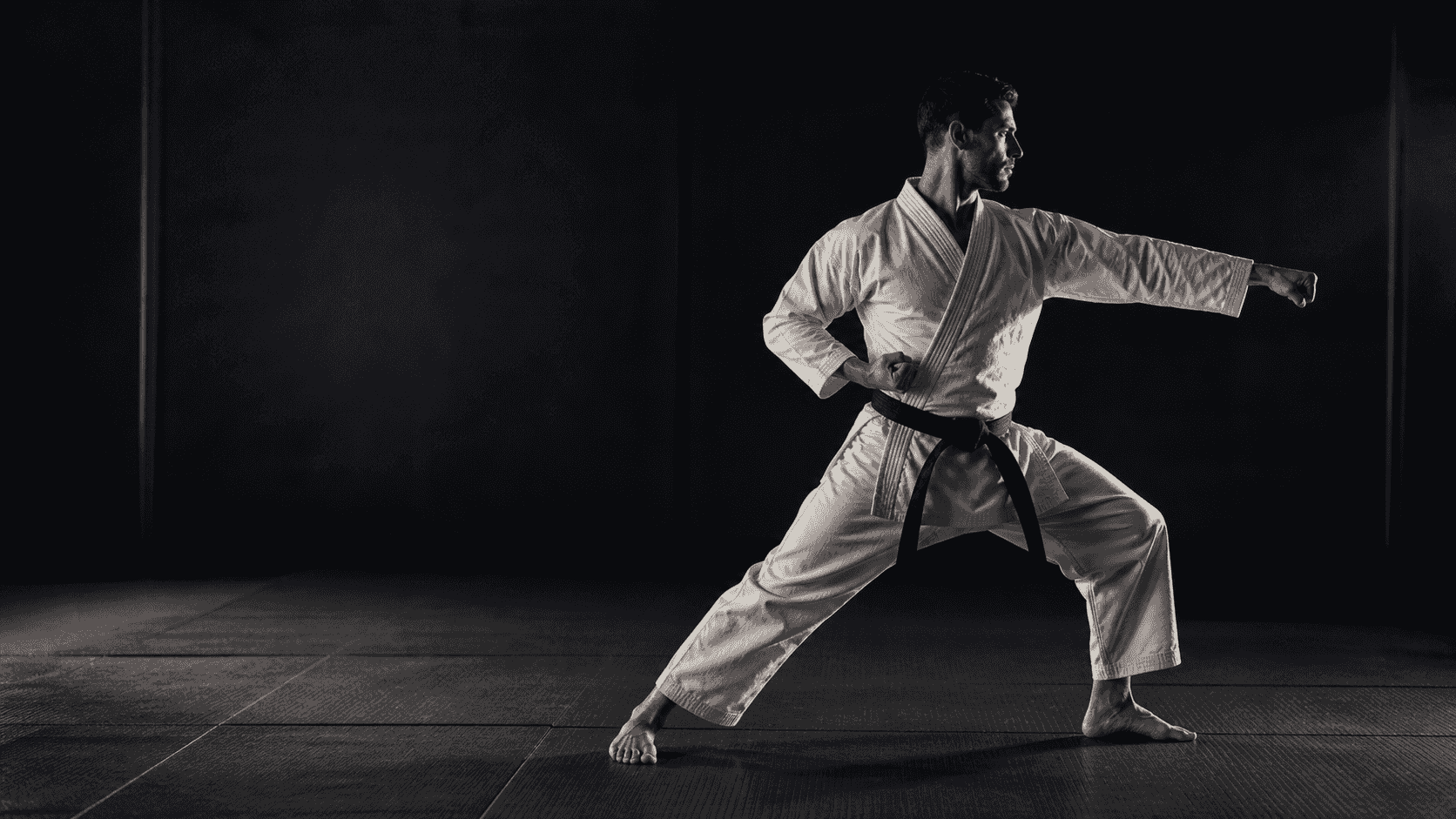
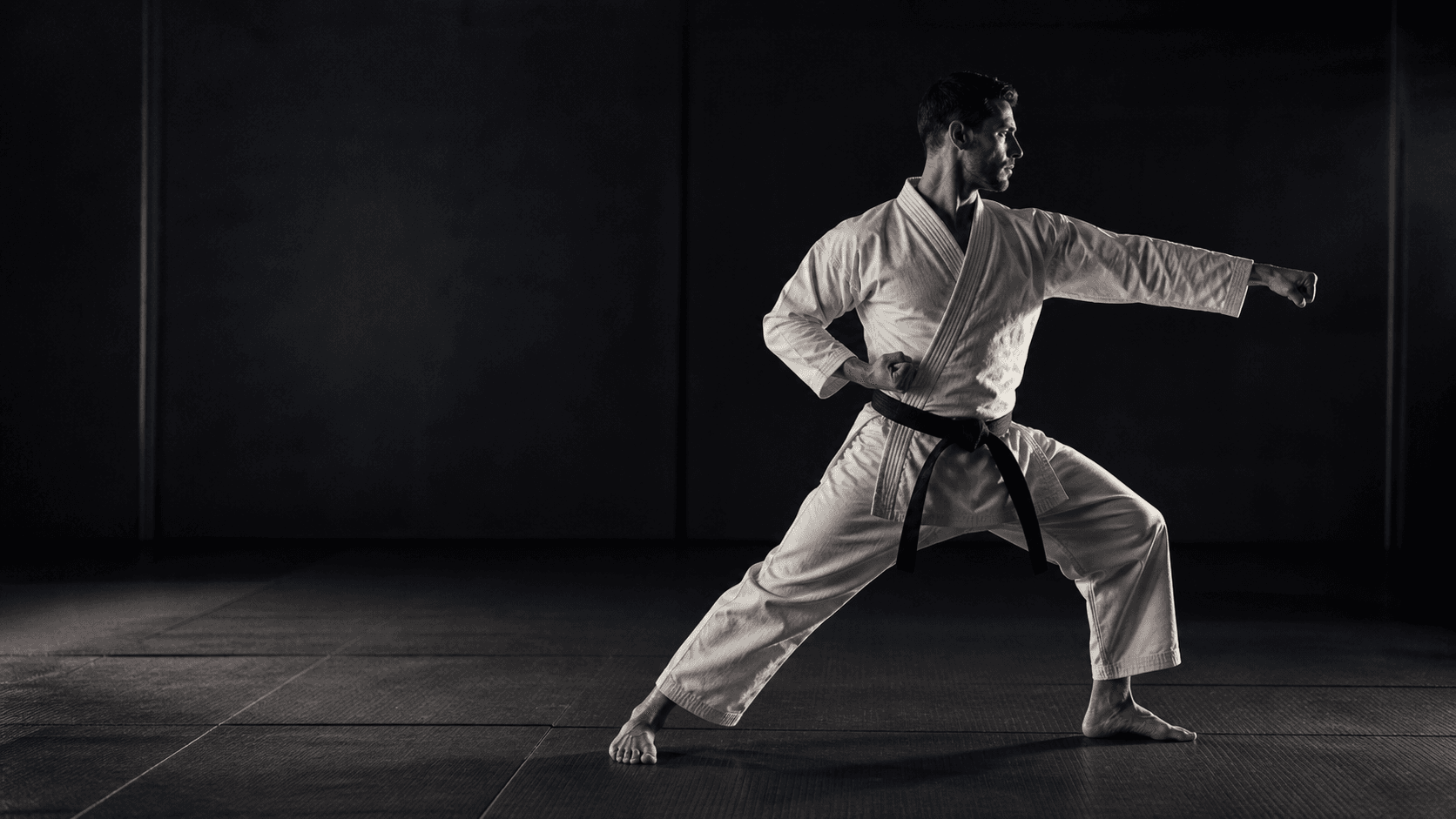
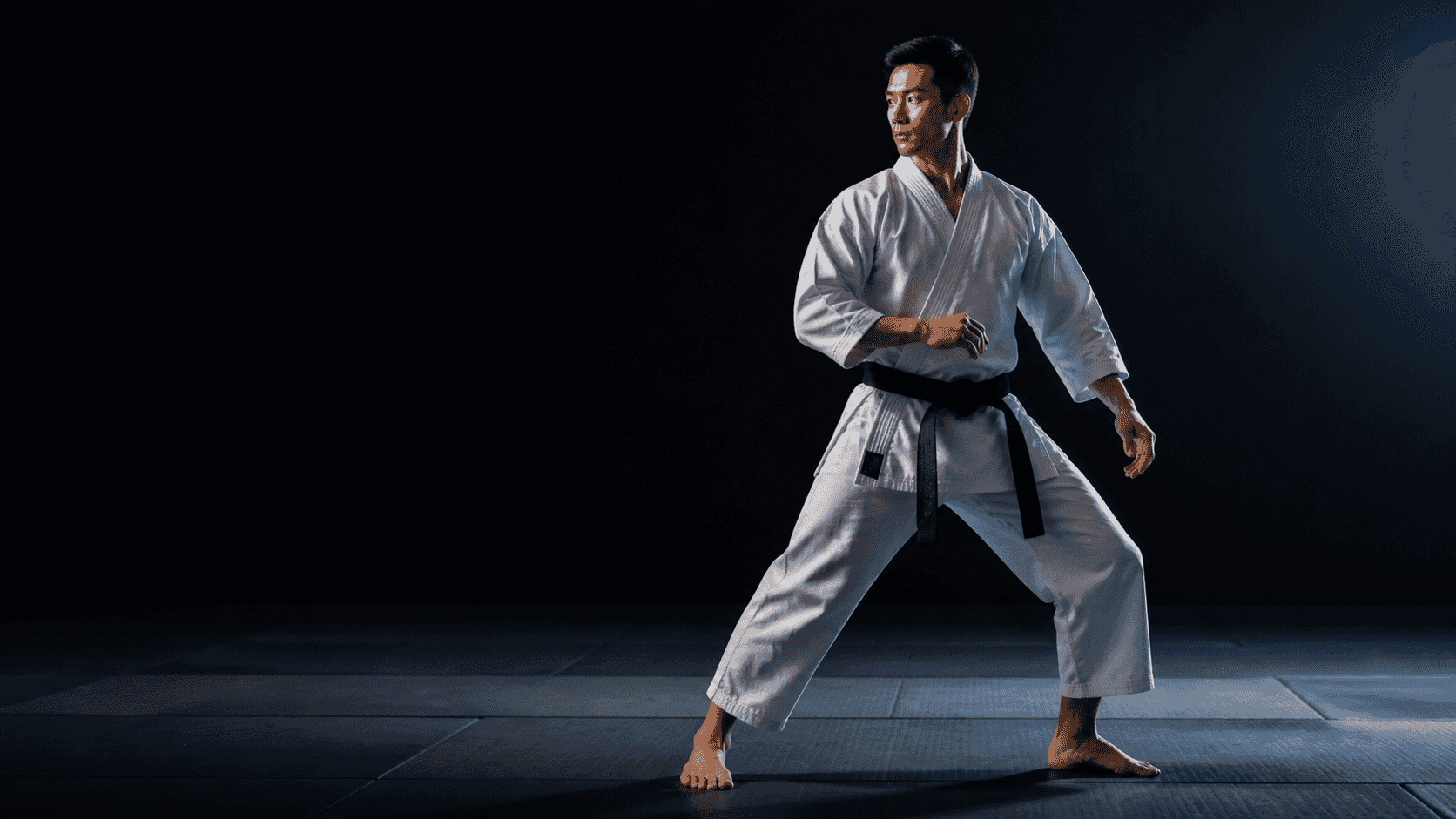
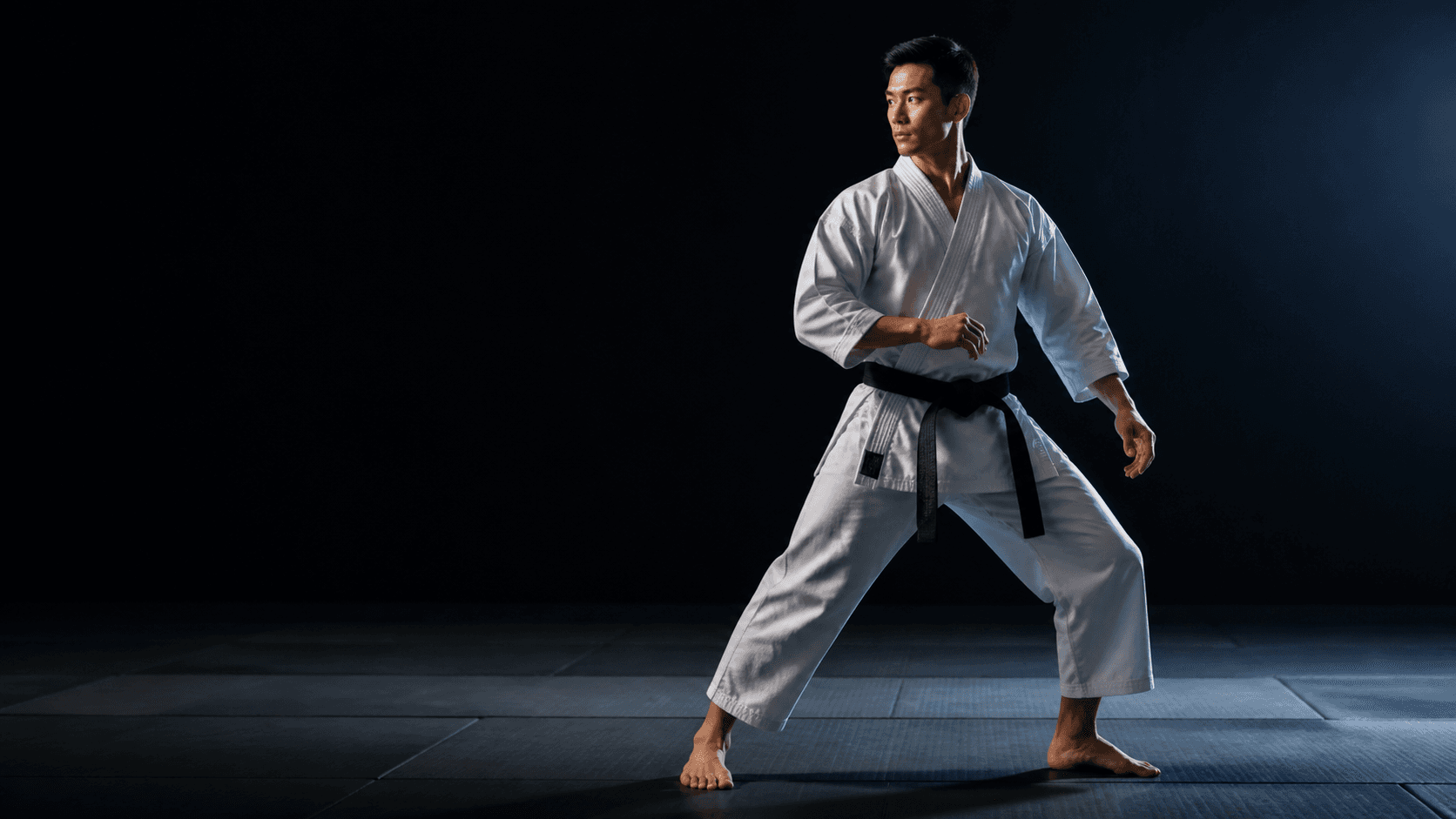
Karate stances ask for hip mobility, ankle flexibility and some length in the hamstrings and hip flexors, but not nearly as much as people assume before they have seen a class. Zenkutsu dachi, the long front stance most beginners learn first, needs a comfortable bend in the front knee and enough range in the back hip to keep the rear leg straight without straining. Kokutsu dachi, the back stance, asks more of the ankles than the hips. None of the stances taught in the first months require a split, a deep squat, or touching your palms flat to the floor. A stiff-hipped adult and a naturally supple teenager will both be shown the same stance, at two different depths, and both will be doing it correctly.
Kicks Come Later, and They Come Gradually
The image most beginners have in their head, a kick above the shoulder, belongs to advanced students who have trained for years, not to anyone in their first months. Beginner kicks target the knee, stomach or ribs of an opponent your own height, which is a modest range of motion most adults already have walking up stairs two at a time. A good instructor raises kick height only as a student's hips actually open up through training, never before. If your hamstrings are tight enough that even a low kick feels awkward in week one, that is completely normal, and it is also exactly what regular training slowly fixes.
If You Are Starting in Your 40s, 50s or With an Old Injury
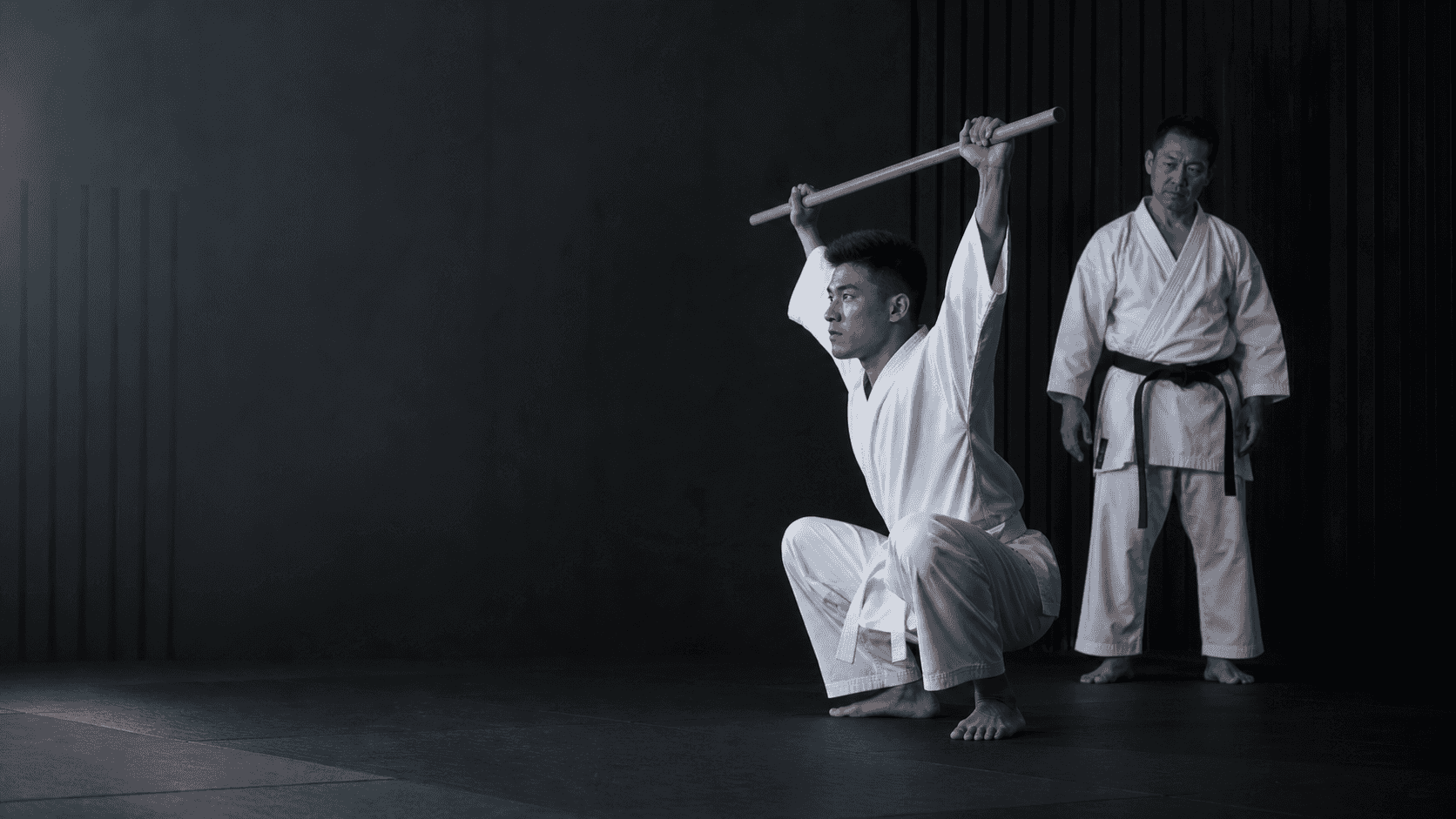
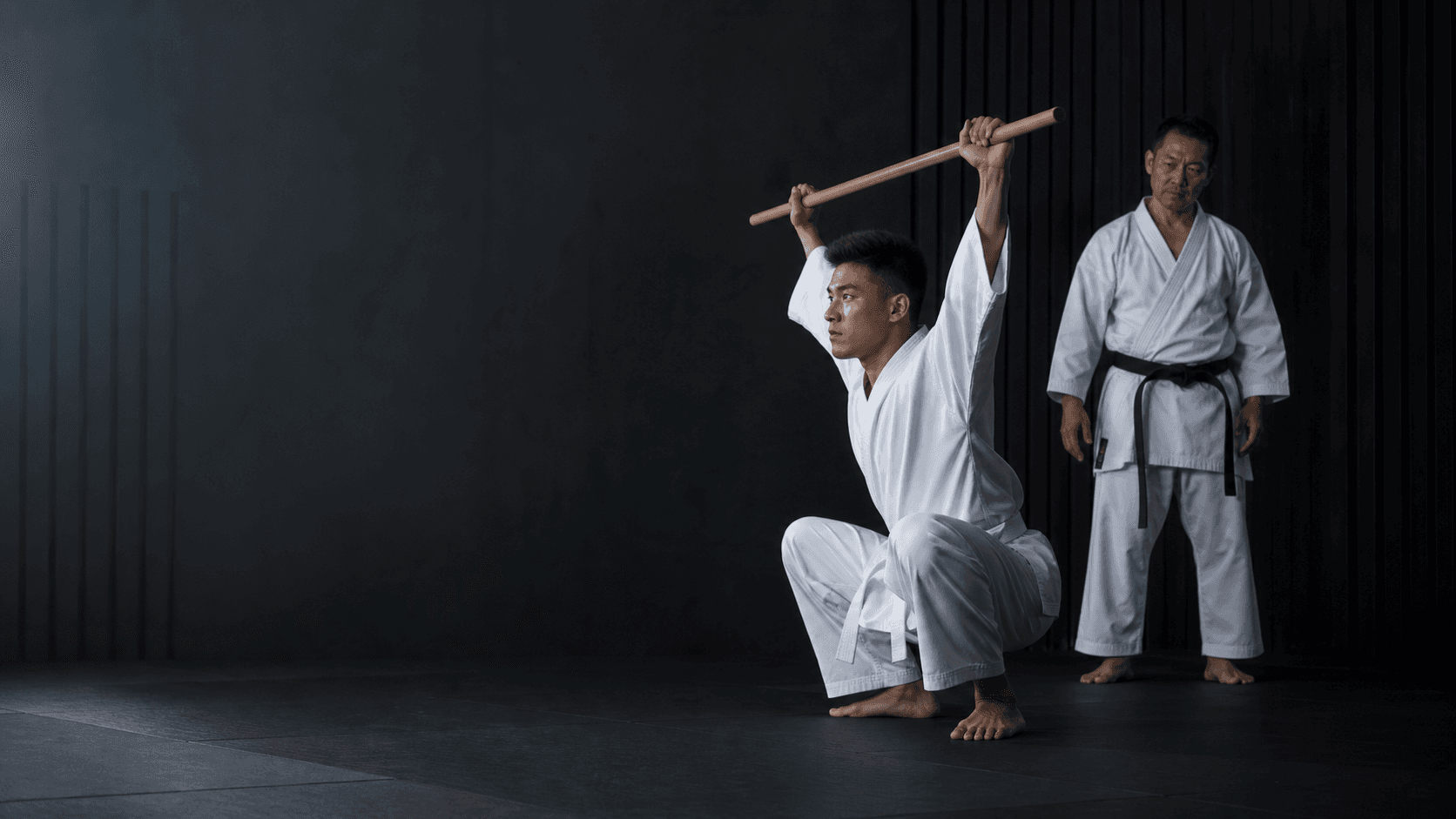
Flexibility genuinely declines with age and with old injuries, and pretending otherwise would not help you. A 45-year-old who has not stretched since school will have a shorter comfortable range than a 20-year-old, and a knee or shoulder that has been operated on may never move quite the way it did before. None of that rules karate out. It changes how a stance is set: a shorter front stance, a slightly higher rear leg, a kick that stops at the shin instead of the ribs, and a club that has actually taught adults before will make that adjustment without being asked twice. What it does rule out is a club that drills everyone to the same depth regardless of age or history. That is worth watching for on a trial visit, not just asking about over the phone.
How Flexibility Actually Improves, and How Fast
Karate improves flexibility mostly as a side effect of repetition, not through forced stretching. Every class opens with a warm-up that mobilizes the hips, ankles and shoulders before any technique is drilled, and every stance you hold under instruction is itself a mild, controlled stretch repeated dozens of times. Static stretching, holding a position at the edge of your range, plays a smaller supporting role, usually at the end of class when the muscles are already warm. Most adults notice their hips moving more freely within four to six weeks, and a genuinely different range of motion, the kind that changes how a stance looks, by three to four months of consistent attendance. Nobody arrives flexible. Almost everyone leaves more flexible than they started, on a timeline measured in months, not days.
What to Ask Before You Join
A club that is honest about this will not dodge the question. On a trial visit, it is fair to ask:
- Will beginners be shown a shortened or modified version of a stance if their hips do not open that far yet
- Does the warm-up include hip and ankle mobility work before stances are drilled
- Are kicks scaled to the individual, or does everyone kick the same height regardless of experience
- What happens if a student has a pre-existing knee, hip or back issue
If those answers come easily and without hesitation, that tells you more about the club than anything on its website.
At Kartal Karate Academy at Yakacık Spor Kulübü, beginner classes are built around whatever range of motion a student actually has on day one, not the range they are expected to arrive with. Sensei Behzad Yaghoubian and Sensei Homa Yaghoubian teach children and adults six days a week, and every new student is welcome to a free trial class before committing to anything. If tight hips or an old injury are the only thing standing between you and a first class, come and find out what your body can actually do. Register at karatekartal.fit/en/register.